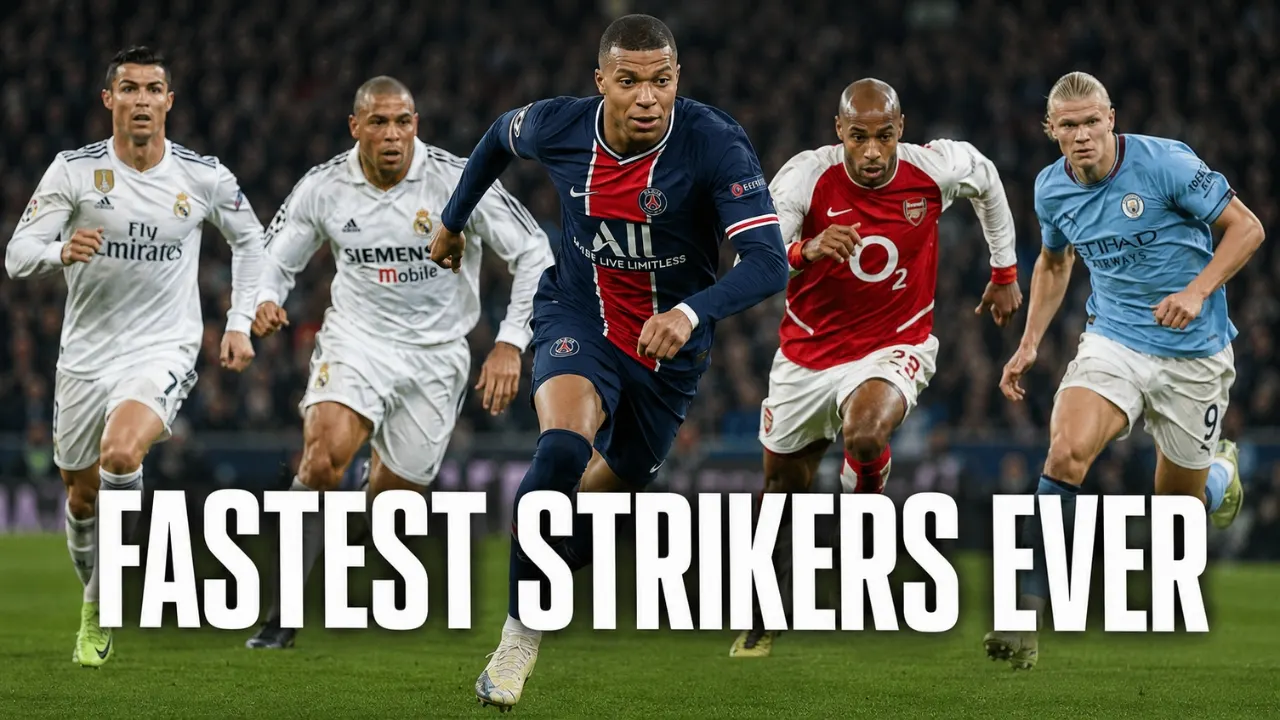
Some of football's quickest forwards have used elite speed to dominate defenders and create unforgettable moments.
Speed has always been one of football’s most devastating weapons. A striker with elite acceleration can turn a half-chance into a goal, stretch defensive lines, and completely change the way opponents set up. While finishing, movement, and technical ability remain essential traits for forwards, raw pace has helped some of the game’s greatest strikers leave a lasting mark on football history.
Determining the fastest strikers ever is not an exact science. Reliable sprint data only became widely available in the modern era, meaning comparisons between generations require context. Some players have recorded official sprint speeds through league tracking systems, while others built reputations through performances that repeatedly overwhelmed defenders. This guide looks at the fastest strikers in football history based on verified speed records where available, combined with documented performances at the highest level.
Fastest Strikers in Football History: Quick Summary
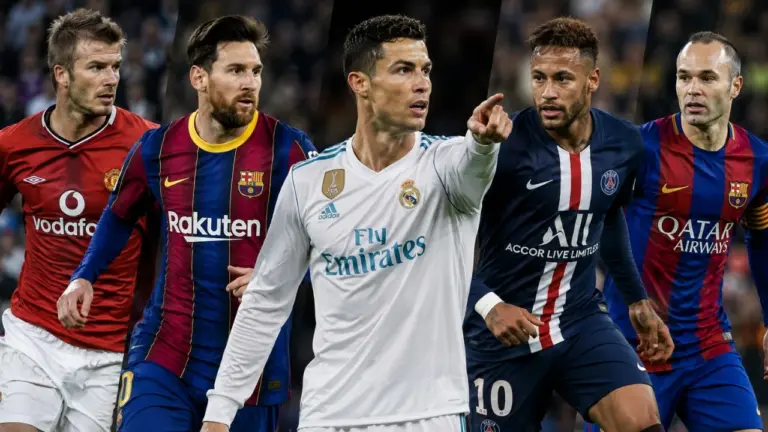
When discussing the fastest strikers in football history, Kylian Mbappé, Cristiano Ronaldo, Gareth Bale, Ronaldo Nazário, Thierry Henry, Erling Haaland, Michael Owen, Pierre-Emerick Aubameyang, Samuel Eto’o, and Fernando Torres are among the names most frequently associated with elite pace at the highest level of the game.
Top 10 Fastest Strikers in Football History
| Rank | Player | Nationality | Era |
|---|---|---|---|
| 1 | Kylian Mbappé | France | 2015–Present |
| 2 | Cristiano Ronaldo | Portugal | 2002–Present |
| 3 | Gareth Bale | Wales | 2006–2023 |
| 4 | Ronaldo Nazário | Brazil | 1993–2011 |
| 5 | Thierry Henry | France | 1994–2014 |
| 6 | Erling Haaland | Norway | 2016–Present |
| 7 | Michael Owen | England | 1996–2013 |
| 8 | Pierre-Emerick Aubameyang | Gabon | 2008–Present |
| 9 | Samuel Eto’o | Cameroon | 1997–2019 |
| 10 | Fernando Torres | Spain | 2001–2019 |
What Makes a Striker Truly Fast?
Speed in football is more complex than a simple sprint time.
Elite strikers often combine several qualities:
- Explosive acceleration
- Top-end sprint speed
- Agility while carrying the ball
- Ability to change direction quickly
- Timing of attacking runs
- Endurance over 90 minutes
A player may not always have the highest recorded speed but can still be more dangerous because of how effectively they use their pace.
1. Kylian Mbappé
Why He Belongs at the Top
Few players in football history have combined elite speed with world-class finishing as effectively as Mbappé.
During the 2018 FIFA World Cup, his acceleration became a global talking point. FIFA tracking data recorded him reaching speeds comparable to elite sprinters during attacking transitions. Since then, Ligue 1 and UEFA Champions League matches have repeatedly shown defenders struggling to match his pace in open space.
What Makes Him Different?
Unlike many fast forwards, Mbappé maintains close control at full speed. Defenders often know exactly what he intends to do but remain unable to stop him.
2. Cristiano Ronaldo
Speed Throughout His Career
Cristiano Ronaldo’s speed evolved throughout his career.
During his Manchester United and early Real Madrid years, he combined explosive acceleration with exceptional dribbling. Studies conducted around his peak years regularly highlighted his sprinting ability among football’s elite athletes.
Even as he transitioned into a more central attacking role, Ronaldo remained capable of producing rapid bursts that separated him from defenders.
Legacy as a Fast Striker
His pace was particularly devastating on counterattacks, where long strides allowed him to cover ground remarkably quickly.
3. Gareth Bale
The Sprint That Defined a Career
Bale’s famous run past Marc Bartra in the 2014 Copa del Rey final remains one of football’s most iconic displays of speed.
Starting from a difficult position near the touchline, Bale accelerated around the defender before finishing clinically.
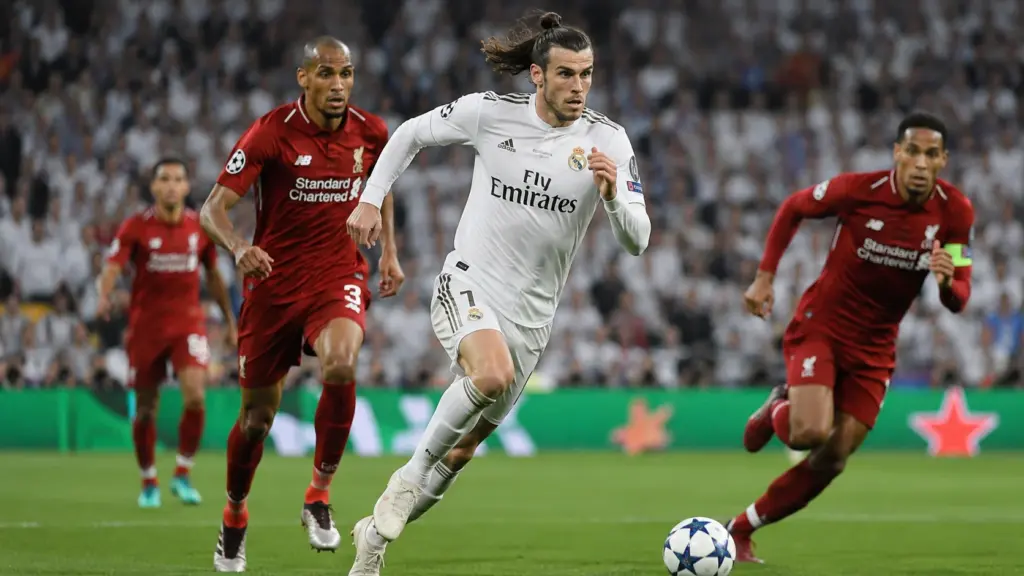
The moment perfectly illustrated why defenders feared facing him in open space.
More Than Just Pace
At his peak, Bale combined speed with power, aerial ability, and long-range shooting, making him one of the most complete attacking players of his generation.
4. Ronaldo Nazário
The Original Phenomenon
Before modern tracking systems existed, Ronaldo Nazário was redefining what a striker could do.
His combination of acceleration, balance, and dribbling allowed him to glide past defenders who often appeared frozen in place.
Former teammates and opponents frequently described his first few steps as among the quickest they had ever seen.
Peak Years
His performances for PSV, Barcelona, Inter Milan, and Brazil showcased a level of explosive athleticism rarely seen from a central striker.
5. Thierry Henry
Elegance and Speed Combined
Henry rarely looked like he was sprinting at maximum effort.
Yet defenders repeatedly found themselves trailing behind him.
His long stride pattern allowed him to cover large distances efficiently while maintaining excellent ball control.
Arsenal’s Perfect Counterattacking Weapon
Under Arsène Wenger, Henry became one of the Premier League’s most feared forwards because of his ability to exploit space behind defensive lines.
6. Erling Haaland
Modern Power and Pace
Haaland’s speed often surprises people because of his size.
Standing over six feet tall, he possesses the physical profile of a traditional target striker. Yet Bundesliga and Premier League tracking data have regularly placed him among the fastest players on the pitch.
Why Defenders Struggle
Most defenders are either quicker or stronger than their opponents.
Haaland is often both.
His ability to accelerate while maintaining physical dominance makes him uniquely difficult to contain.
Speed Comparison Table
| Player | Known For |
|---|---|
| Mbappé | Explosive acceleration and top speed |
| Ronaldo | Long-distance sprinting power |
| Bale | Open-field speed |
| Ronaldo Nazário | Acceleration with the ball |
| Henry | Efficient stride length |
| Haaland | Strength combined with speed |
| Owen | Sharp bursts behind defenses |
| Aubameyang | Straight-line pace |
| Eto’o | Counterattacking runs |
| Torres | Acceleration in transition |
Why Speed Matters More Today
Modern football places enormous emphasis on transitions.
Teams defend higher up the pitch, creating space behind defensive lines. Fast strikers can exploit these gaps in ways that were less common in previous eras.
The rise of pressing systems has also increased the value of forwards capable of covering large distances quickly.
Why Pace Creates Tactical Problems
Fast strikers influence matches even when they do not score. Their ability to threaten space behind the defense forces opponents to drop deeper, alters defensive positioning, and creates additional room for teammates in attacking areas.
7. Michael Owen
England’s Explosive Young Star
Before injuries began to affect his career, Michael Owen was among the quickest forwards in world football.
His breakthrough years at Liverpool showcased a striker capable of accelerating past defenders in just a few strides. Owen’s famous solo goal against Argentina at the 1998 FIFA World Cup remains one of the most memorable examples of his pace and direct running.
Why Defenders Struggled Against Him
Owen’s speed was not simply about straight-line sprinting. He excelled at timing runs behind defensive lines and reaching top speed almost instantly, making him particularly dangerous in transition.
8. Pierre-Emerick Aubameyang
Consistent Pace Across Multiple Leagues
Aubameyang built his reputation as one of football’s fastest forwards during spells with Saint-Étienne, Borussia Dortmund, Arsenal, and Barcelona.
Throughout his prime years, Bundesliga speed data frequently placed him among the quickest players in Germany. His ability to stretch defenses became a key component of Dortmund’s counterattacking approach.
A Perfect Fit for Transitional Football
Few strikers were better suited to open-space attacks. When opponents committed numbers forward, Aubameyang often punished them with rapid runs behind the back line.
9. Samuel Eto’o
Speed With Purpose
Samuel Eto’o was one of the defining strikers of the 2000s.
Whether playing for Mallorca, Barcelona, Inter Milan, or Cameroon, his pace consistently caused problems for defenders. Eto’o combined acceleration with intelligent movement, allowing him to exploit defensive gaps before opponents could react.
Big-Match Threat
His speed was particularly effective in high-pressure matches where small moments often determined outcomes. Eto’o’s ability to attack space quickly made him a reliable scorer on the biggest stages.
10. Fernando Torres
Prime Torres Was Devastating
At Liverpool, Fernando Torres became one of Europe’s most feared forwards.
His acceleration over short and medium distances regularly exposed defenders in the Premier League. Combined with excellent finishing and intelligent movement, Torres developed into one of the most complete strikers of his era.
Why Fans Remember His Pace
Many remember Torres for his goals, but his speed was equally important. Defenders frequently found themselves chasing him toward goal after a perfectly timed run beyond the defensive line.
Fastest Strikers Across Different Football Eras
| Era | Notable Fast Strikers |
|---|---|
| 1990s | Ronaldo Nazário, Michael Owen |
| 2000s | Thierry Henry, Samuel Eto’o, Fernando Torres |
| 2010s | Cristiano Ronaldo, Gareth Bale, Aubameyang |
| 2020s | Kylian Mbappé, Erling Haaland |
This progression highlights how speed has remained a valuable asset across generations, even as tactical systems have evolved.
Common Misconceptions About Fast Strikers
Fastest Doesn’t Always Mean Best
Speed alone does not guarantee success.
Many players possess exceptional pace but lack the finishing ability, positioning, or decision-making required to become elite strikers. The players on this list combined speed with high-level football intelligence.
Top Sprint Speed Isn’t Everything
A player may record an impressive sprint speed during a match, but acceleration often matters more.
The ability to reach top speed quickly can create separation before defenders have time to react.
Ball Control Matters
Running fast without the ball is valuable. Running fast while maintaining close control is much harder.
Players such as Mbappé, Henry, and Ronaldo Nazário stood out because they could carry the ball at speeds that most players struggle to match even without possession.
How Modern Technology Measures Speed
Football clubs now use advanced tracking systems to monitor player movement.
These technologies measure:
- Sprint speed
- Distance covered
- Accelerations
- Decelerations
- High-intensity runs
- Positional movement
As a result, modern players have more verified speed data available than footballers from previous generations.
This is one reason direct comparisons between eras should always be approached carefully.
Key Takeaways
- Kylian Mbappé is widely regarded as one of the fastest strikers in modern football and is frequently included in discussions about the quickest players ever recorded in the sport.
- Cristiano Ronaldo combined elite speed with extraordinary longevity.
- Gareth Bale produced some of football’s most memorable sprinting moments.
- Ronaldo Nazário remains one of the quickest and most explosive strikers ever seen.
- Thierry Henry blended pace with technical brilliance.
- Erling Haaland proves size and speed can coexist at the highest level.
- Michael Owen, Aubameyang, Eto’o, and Torres were among the most feared fast forwards of their generations.
- Acceleration, movement, and ball control are often just as important as raw sprint speed.
Final Thoughts
Football has produced countless great goalscorers, but only a select group have possessed truly extraordinary speed. What separates the players on this list is not simply how fast they could run, but how effectively they used that pace to influence matches.
From Ronaldo Nazário’s explosive bursts in the 1990s to Kylian Mbappé’s devastating acceleration in the modern game, these strikers forced defenders to adapt, changed tactical approaches, and created moments that remain etched in football history.
As tracking technology continues to improve, future generations may challenge these names. For now, these forwards remain among the fastest and most electrifying strikers the sport has ever seen.
FAQ
Who is considered the fastest striker in football history?
There is no universally accepted answer because speed records vary across eras and competitions. Kylian Mbappé is widely regarded as one of the fastest strikers ever based on modern tracking data, while players such as Ronaldo Nazário, Gareth Bale, and Thierry Henry are also frequently included in the discussion.
Was Cristiano Ronaldo faster than Kylian Mbappé?
Both players possess elite speed, but available tracking data generally places Mbappé ahead in peak sprint speed, while Ronaldo combined pace with exceptional power and longevity.
How fast was Ronaldo Nazário?
Official tracking data from his peak years is limited, but Ronaldo Nazário was widely recognized by teammates, coaches, and opponents as one of the fastest and most explosive strikers ever.
Is Erling Haaland one of the fastest strikers today?
Yes. Despite his size, Haaland regularly records some of the highest sprint speeds in elite football and remains among the quickest forwards in the game.
Why is acceleration important for strikers?
Acceleration allows a striker to create separation quickly, reach through balls first, and exploit defensive gaps before opponents can react.
Are modern strikers faster than previous generations?
Modern players benefit from advanced sports science, nutrition, and training methods, but direct comparisons remain difficult because older generations lacked detailed speed-tracking technology.
Sources Used
Official club performance and tracking data published by participating leagues and clubs where available
- FIFA
- UEFA
- Premier League
- Bundesliga
- UEFA Champions League
- BBC Sport
- Sky Sports
- Reuters
- ESPN FC
- GOAL
- Opta Sports
About the Author