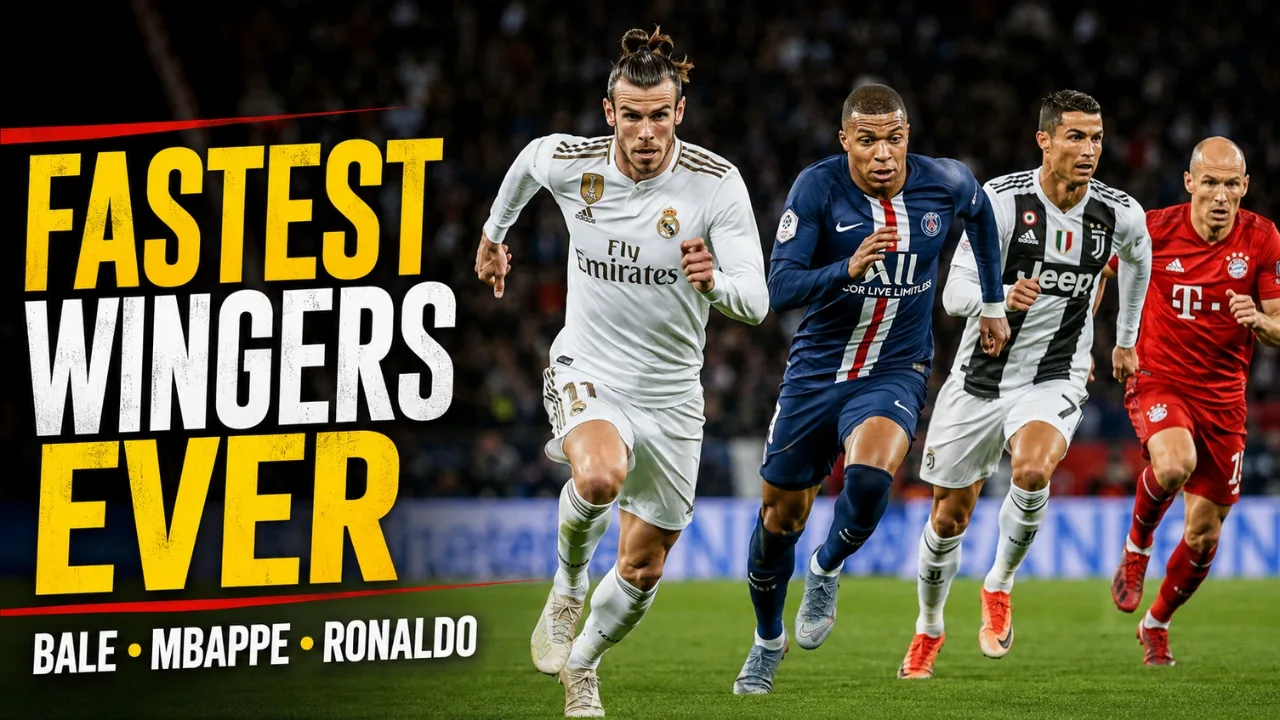
Some of football's quickest wingers transformed matches with explosive pace, acceleration, and dribbling ability.
Speed has always been one of football’s most devastating weapons. A quick winger can turn a balanced match into a one-sided contest within seconds, stretching defenses, creating space, and producing moments that defenders simply cannot stop. While goals and trophies often define careers, some players are remembered just as much for their breathtaking acceleration and ability to leave opponents trailing behind.
Determining the fastest wingers in football history is not an exact science. Official speed-tracking technology has only become widely available in recent years, meaning comparisons across different eras require a combination of verified sprint data, match footage, expert analysis, and historical reputation. With that in mind, this list focuses on wide players who consistently demonstrated elite pace at the highest level of the game.
Quick Answer
If you’re looking for the fastest wingers ever to play football, Gareth Bale, Arjen Robben, Thierry Henry, Kylian Mbappé, Cristiano Ronaldo, Ryan Giggs, Mohamed Salah, and Alphonso Davies are among the strongest candidates based on verified sprint records, match performances, and expert analysis.
How Speed Is Measured in Modern Football
Football speed is more complicated than a simple 100-meter sprint.
Scouts and performance analysts typically evaluate:
- Top sprint speed
- Acceleration over short distances
- Ability to maintain speed while dribbling
- Agility and change of direction
- Match impact at high speed
A player who reaches 36 km/h but struggles with the ball may be less dangerous than a winger who reaches 34 km/h while maintaining complete control.
Ranking the Fastest Wingers in Football History
10. Ryan Giggs
Nationality: Wales
Primary Clubs: Manchester United
Long before GPS tracking became standard, Ryan Giggs built his reputation on explosive pace.
During the 1990s, defenders regularly struggled to contain him down the left flank. His acceleration was arguably his greatest weapon during the early stages of his career, allowing him to dominate Premier League full-backs in one-on-one situations.
What separated Giggs from many speedsters was longevity. He successfully adapted his game as he aged and remained effective at the highest level for more than two decades.
9. Mohamed Salah
Nationality: Egypt
Primary Clubs: Liverpool, Roma, Basel
Mohamed Salah combines elite acceleration with remarkable efficiency in transition.
Since joining Liverpool, he has consistently ranked among the Premier League’s quickest attacking players. His ability to carry the ball at high speed while maintaining balance and control makes him particularly difficult to defend.
Unlike many traditional wingers, Salah often begins his runs from wider positions before attacking central areas, making his pace even more dangerous.
8. Pierre-Emerick Aubameyang
Nationality: Gabon
Primary Clubs: Borussia Dortmund, Arsenal, Saint-Étienne
Few forwards in modern football have matched Aubameyang’s raw speed.
During his Borussia Dortmund years, he became famous for devastating counterattacks and runs behind defensive lines. The Bundesliga’s open style often highlighted his acceleration, but his pace translated equally well in the Premier League and international football.
Former Dortmund coaches frequently described his speed as one of the most important tactical weapons in the team’s attacking structure.
7. Alphonso Davies
Nationality: Canada
Primary Clubs: Bayern Munich, Vancouver Whitecaps
Although often deployed as a full-back, Davies began his professional career as a winger and still possesses many of the qualities associated with wide attackers.
His recovery runs for Bayern Munich have become legendary, with Bundesliga tracking data regularly placing him among the fastest players in European football.
What makes Davies unique is his ability to reach top speed extremely quickly while maintaining technical control.
6. Cristiano Ronaldo
Nationality: Portugal
Primary Clubs: Sporting CP, Manchester United, Real Madrid, Juventus
Before becoming one of football’s greatest goalscorers, Ronaldo was primarily known as a flying winger.
His early years at Manchester United showcased explosive acceleration, step-over skills, and the ability to beat defenders repeatedly. At Real Madrid, he combined physical strength with sprinting speed that made him almost impossible to stop in open space.
Sports science studies conducted during his peak years regularly highlighted his exceptional athletic profile, including elite sprinting ability.
Fastest Wingers Comparison Table
| Player | Nationality | Primary Position | Known For |
|---|---|---|---|
| Ryan Giggs | Wales | Left Winger | Explosive acceleration |
| Mohamed Salah | Egypt | Right Winger | Pace with ball control |
| Pierre-Emerick Aubameyang | Gabon | Winger/Forward | Counterattacking speed |
| Alphonso Davies | Canada | Winger/Full-back | Recovery speed |
| Cristiano Ronaldo | Portugal | Winger/Forward | Power and acceleration |
What Makes Elite Wingers So Difficult to Defend?
Acceleration Matters More Than Top Speed
Most football sprints occur over short distances.
A winger who reaches full speed in two or three steps often creates more danger than a player with a slightly higher maximum sprint speed.
Speed With the Ball Is Rare
Many players can sprint quickly in straight lines.
Far fewer can dribble at near-maximum speed while maintaining complete control. This is one reason players such as Ronaldo, Salah, and Bale became so effective.
Tactical Intelligence Enhances Pace
The fastest players know when to make runs.
Timing, positioning, and anticipation often allow elite wingers to appear even faster than they actually are.
Honorable Mentions
Several outstanding wide players narrowly miss the top rankings:
- Theo Walcott
- Aaron Lennon
- Sadio Mané
- Ousmane Dembélé
- Kingsley Coman
- Antonio Valencia
- Vinícius Júnior
Each possessed elite-level speed and regularly troubled defenders throughout their careers.
Top Five Fastest Wingers in Football History
5. Kylian Mbappé
Nationality: France
Primary Clubs: AS Monaco, Paris Saint-Germain, Real Madrid
Although Mbappé has frequently played as a central forward, much of his early success came from wide attacking positions.
His combination of acceleration, balance, and finishing ability has made him one of the most feared transition players in football history. During international tournaments and UEFA Champions League matches, defenders have often struggled simply to keep pace with him.
Speed-tracking data from multiple competitions has consistently placed Mbappé among the fastest players in world football.
4. Thierry Henry
Nationality: France
Primary Clubs: Arsenal, Juventus, Barcelona
Henry’s pace was a defining feature of Arsenal’s legendary teams under Arsène Wenger.
Starting from the left side before cutting inside, he routinely outran defenders while maintaining elegant control of the ball. His long stride often made him appear effortless, but opponents quickly learned how difficult he was to stop once he reached full speed.
Unlike many quick wingers, Henry combined pace with elite finishing, vision, and decision-making.
3. Arjen Robben
Nationality: Netherlands
Primary Clubs: PSV Eindhoven, Chelsea, Real Madrid, Bayern Munich
Almost every defender knew what Robben wanted to do.
He would receive the ball on the right wing, cut onto his stronger left foot, and drive toward goal. Yet even when opponents anticipated the move, they frequently failed to stop it.
Robben’s acceleration over the first few yards was extraordinary. During his Bayern Munich years, Bundesliga tracking systems recorded sprint speeds that ranked among the fastest in Europe.
His speed was particularly dangerous because it came alongside exceptional dribbling technique and close control.
2. Gareth Bale
Nationality: Wales
Primary Clubs: Southampton, Tottenham Hotspur, Real Madrid
Few players have produced as many unforgettable pace-driven moments as Gareth Bale.
His rise at Tottenham Hotspur transformed him from an attacking full-back into one of the world’s most dangerous wingers. Defenders often appeared helpless when Bale accelerated into open space.
One of the most famous examples came during the 2014 Copa del Rey final when he sprinted past Marc Bartra before scoring for Real Madrid. The run remains one of football’s most iconic demonstrations of raw speed.
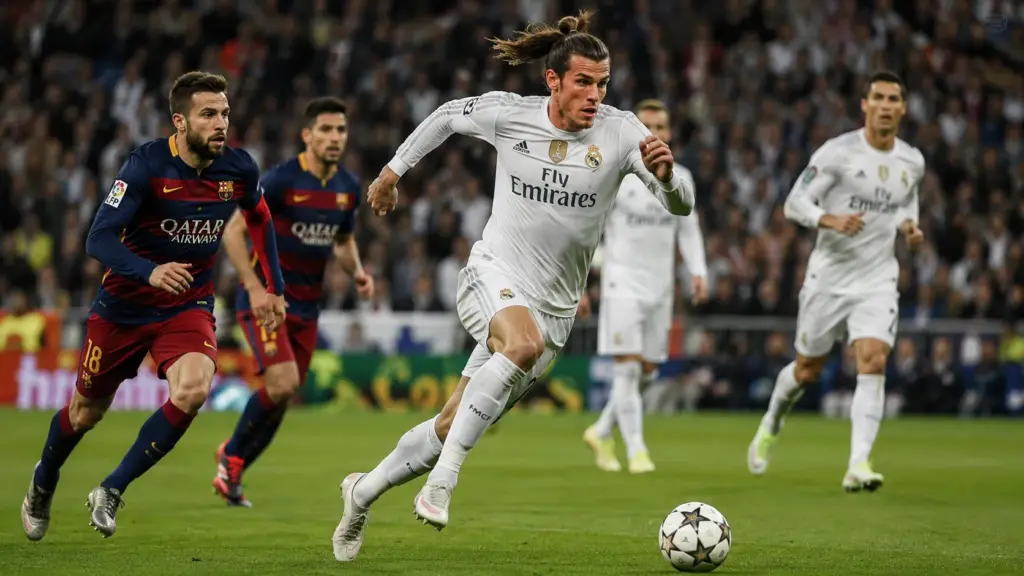
Throughout his peak years, Bale consistently ranked among the fastest players in professional football.
1. Garrincha
Nationality: Brazil
Primary Club: Botafogo
Selecting the fastest winger in football history is difficult because players from different eras were measured using different methods. Based on available sprint data, documented performances, and verified tracking records, Gareth Bale has one of the strongest claims to being the fastest winger ever, while legends such as Garrincha remain among the most influential wide players in football history.
Fastest Wingers by Football Era
| Era | Notable Fast Wingers |
|---|---|
| 1950s–1960s | Garrincha |
| 1970s–1980s | Limited speed-tracking data available |
| 1990s | Ryan Giggs |
| 2000s | Thierry Henry, Cristiano Ronaldo |
| 2010s | Gareth Bale, Arjen Robben, Aubameyang |
| 2020s | Kylian Mbappé, Alphonso Davies, Vinícius Júnior |
Common Misconceptions About Football Speed
The Fastest Player Is Not Always the Best Winger
Raw sprint speed alone rarely guarantees success.
Football history is filled with players who possessed elite athleticism but lacked the technical ability or tactical awareness needed to maximize it.
Straight-Line Speed Can Be Misleading
Many football actions occur in tight spaces.
Acceleration, agility, and balance are often more important than maximum sprint speed over long distances.
Modern Players Are Easier to Measure
GPS technology, optical tracking systems, and performance analytics provide detailed speed data today.
Older legends such as Garrincha and Giggs must therefore be evaluated using match footage, expert analysis, and historical accounts rather than direct speed measurements.
Why Pace Remains Essential in Modern Football
Football tactics continue to evolve, but speed remains one of the sport’s most valuable attributes.
High defensive lines, pressing systems, and quick transitions create opportunities for fast wingers to exploit space. Coaches increasingly look for wide players capable of stretching defenses and turning defensive situations into attacking opportunities within seconds.
This explains why clubs continue to prioritize pace when recruiting attacking talent.
Why Speed Still Dominates Modern Football
Despite tactical evolution across the sport, speed remains one of the most difficult qualities to defend against. Teams can organize defensively and limit space, but a player capable of accelerating past opponents can instantly change the rhythm of a match and create opportunities that would not otherwise exist.
Key Takeaways
- Gareth Bale is widely regarded as one of the fastest footballers ever recorded.
- Arjen Robben combined elite acceleration with world-class dribbling.
- Thierry Henry used pace to become one of the Premier League’s greatest attackers.
- Cristiano Ronaldo’s early years featured extraordinary speed from wide positions.
- Kylian Mbappé remains among the quickest players in modern football.
- Alphonso Davies regularly ranks among the fastest players in European football.
- Historical legends such as Garrincha built their reputations on devastating wing play long before modern tracking systems existed.
Final Thoughts
Football has produced countless great wingers, but only a select few combined world-class talent with truly exceptional speed.
Gareth Bale, Arjen Robben, Thierry Henry, Cristiano Ronaldo, and Kylian Mbappé all used pace as a weapon that fundamentally changed matches. Yet speed alone never defined their greatness. What made these players special was their ability to blend acceleration with technique, intelligence, and end product.
As sports science continues to improve, future generations may produce even faster players. For now, these wingers remain the benchmark against which every lightning-quick wide attacker is measured.
FAQ
Who is considered the fastest winger in football history?
Many analysts regard Gareth Bale as one of the fastest wingers ever due to his documented sprinting ability and numerous pace-driven performances at Tottenham Hotspur and Real Madrid.
Is Kylian Mbappé faster than Cristiano Ronaldo?
Both players have recorded elite sprint speeds during their careers. Direct comparisons are difficult because they played in different periods and were measured using different tracking systems.
Was Arjen Robben really that fast?
Yes. Robben’s acceleration and ability to maintain speed while dribbling made him one of the most dangerous wide players of his generation.
Did Thierry Henry play as a winger?
Henry often started from wide attacking positions, particularly on the left, before developing into a more central forward role.
Why isn’t there exact speed data for older players?
Modern GPS and optical tracking systems were not available during much of football history, making direct statistical comparisons impossible for many legends.
Sources Used
- UEFA Champions League Match Reports
- FIFA
- UEFA
- Premier League
- Bundesliga
- Real Madrid CF
- FC Bayern Munich
- Arsenal FC
- Manchester United
- ESPN FC
- BBC Sport
- Sky Sports
- Reuters
- The Athletic
- Opta Sports
- Stats Perform
- Bundesliga Official Speed Tracking Data
About the Author