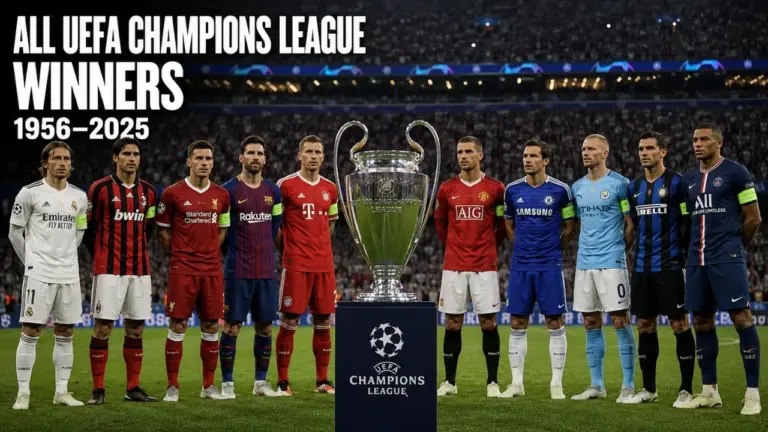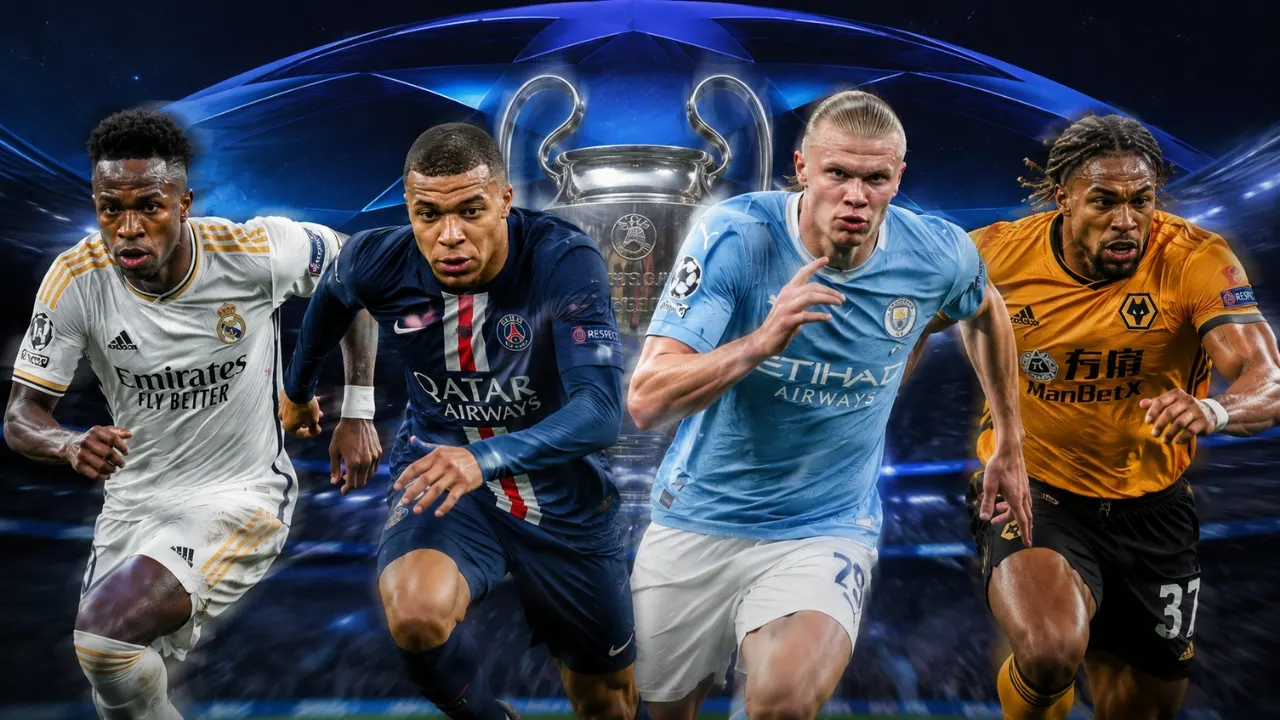
The Champions League has featured some of football's fastest players, including Kylian Mbappé, Erling Haaland, Alphonso Davies, and Achraf Hakimi.
The UEFA Champions League has always been a stage for football’s elite talents, but few attributes change a match quite like raw speed. A perfectly timed sprint can turn defense into attack within seconds, create scoring opportunities out of nothing, and leave world-class defenders struggling to recover.
Modern tracking technology has allowed UEFA and data providers to measure player movement more accurately than ever before. While speed alone does not define greatness, the fastest players in Champions League history have often combined explosive acceleration with technical excellence and tactical intelligence. This ranking looks at some of the quickest players to grace Europe’s premier club competition, based on verified speed data, UEFA tracking records, and performances at the highest level.
Fastest Champions League Players Ever: Quick Summary
| Rank | Player | Position |
|---|---|---|
| 1 | Erling Haaland | Striker |
| 2 | Achraf Hakimi | Right Back |
| 3 | Kylian Mbappé | Forward |
| 4 | Alphonso Davies | Left Back |
| 5 | Vinícius Júnior | Winger |
| 6 | Kyle Walker | Right Back |
| 7 | Rafael Leão | Forward |
| 8 | Nicolas Kühn | Winger |
| 9 | Theo Hernández | Left Back |
| 10 | Gareth Bale | Winger |
This ranking combines verified UEFA speed-tracking data, officially reported sprint records, and consistent evidence of elite pace in Champions League competition. Where exact speed figures are unavailable, rankings also consider a player’s sustained impact and reputation for speed at the highest level.
How Speed Is Measured in the Champions League
UEFA uses advanced optical tracking systems to record player movement during matches.
These systems measure:
- Maximum sprint speed
- Distance covered
- Accelerations
- Decelerations
- Positional movement
Top speed is typically recorded in kilometers per hour (km/h) and reflects the fastest sprint achieved during a match.
10. Gareth Bale
Before injuries began to limit his explosiveness, Gareth Bale was one of the most feared transition players in Europe.
His Champions League performances for Tottenham Hotspur and Real Madrid frequently featured long-distance sprints that defenders simply could not match. Bale’s famous run against Inter Milan in 2010 remains one of the competition’s most memorable displays of pure pace.
Why He Makes the List
- Elite acceleration in his prime
- Consistently dangerous on counterattacks
- Multiple Champions League titles
9. Theo Hernández
The AC Milan left-back combines physical power with remarkable speed.
Unlike many attacking players, Hernández regularly reaches top velocity while carrying the ball over long distances. His ability to turn defensive situations into attacking opportunities has become a defining feature of Milan’s style.
Key Strength
His pace remains effective even when dribbling at full speed.
8. Nicolas Kühn
The Celtic winger emerged among the fastest players recorded during recent Champions League campaigns.
Tracking data placed Kühn among the competition’s quickest attackers, highlighting his ability to stretch defenses and create dangerous wide overloads.
Why Defenders Struggle Against Him
- Direct running style
- Quick first steps
- Excellent movement behind defensive lines
7. Rafael Leão
The Portuguese international has become one of Europe’s most dangerous transition players.
Leão’s long stride allows him to cover huge distances quickly, making him particularly effective during counterattacks. His Champions League performances for AC Milan have repeatedly showcased his ability to outrun defenders in open space.
Champions League Impact
Leão’s speed often forces opposing teams to adjust their defensive shape to prevent isolation situations.
6. Kyle Walker
Even into his thirties, Walker remained one of Europe’s fastest defenders.
His recovery pace became a crucial weapon for Manchester City in Champions League competition, allowing the team to play an aggressive defensive line while maintaining protection against fast attackers.
What Makes Walker Unique
Unlike many speedsters, Walker combines elite pace with defensive awareness and positional discipline.
5. Vinícius Júnior
Few players are more dangerous in open space than Vinícius Júnior.
The Real Madrid star has repeatedly used his acceleration and top-end speed to dominate Champions League knockout matches. His direct running style forces defenders into difficult one-on-one situations.
Why Speed Matters in His Game
- Creates separation quickly
- Helps beat defenders in isolation
- Enhances counterattacking effectiveness
4. Alphonso Davies
Davies has been regarded as one of football’s quickest players since breaking into Bayern Munich’s first team.
UEFA tracking and Champions League data have consistently placed him among the competition’s fastest performers. During one Champions League campaign, Davies recorded a top speed of 37.1 km/h, making him the fastest player in that season’s tournament.
Signature Trait
His ability to recover defensively after attacking runs is virtually unmatched.
3. Kylian Mbappé
When discussions turn to speed in football, Mbappé is usually among the first names mentioned.
Mbappé’s pace has also placed him in wider debates about football’s elite stars. See Best Football Players in the World Right Now (2025 Rankings).
His acceleration, explosive first step, and ability to maintain pace while controlling the ball have made him one of the most feared forwards in Champions League history.
Recent UEFA tracking data placed Mbappé among the fastest players in the competition, reaching speeds above 22.6 mph during Champions League action.
Why He Is So Effective
- Elite acceleration
- Excellent ball control at speed
- Clinical finishing after breaking defensive lines
2. Achraf Hakimi
Hakimi’s pace has transformed him into one of the world’s most complete attacking full-backs.
Champions League tracking data has repeatedly placed him near the top of UEFA’s speed rankings. Recent measurements recorded sprint speeds exceeding 37 km/h.
Tactical Value
Hakimi’s ability to cover the entire flank gives coaches significant tactical flexibility.
1. Erling Haaland
Few players combine size, power, finishing ability, and speed like Erling Haaland.
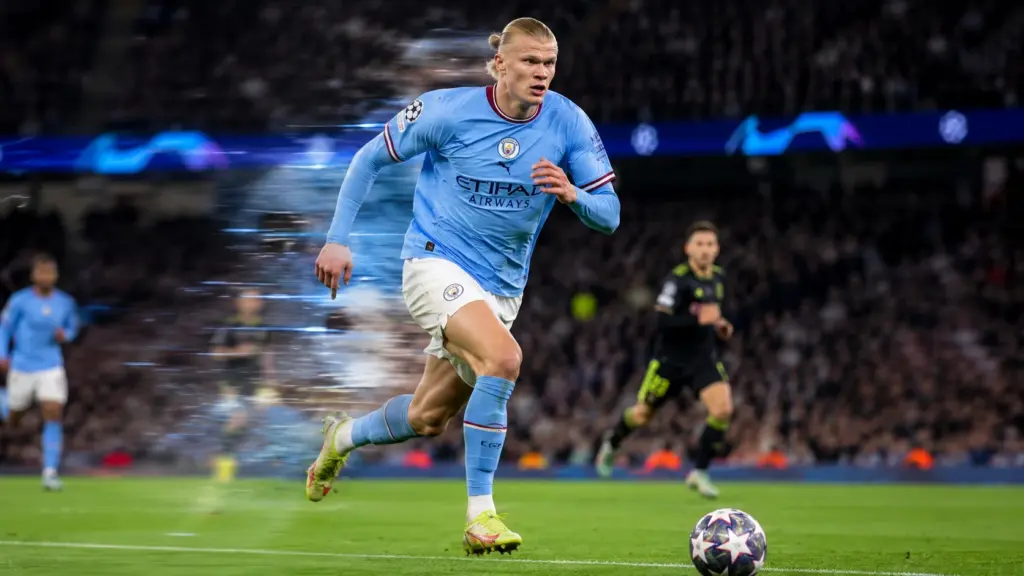
While many fans associate him primarily with goals, UEFA tracking data has repeatedly shown that Haaland is also among the fastest players in Champions League history. During the 2024–25 competition, he recorded a top speed of approximately 36.9 km/h, placing him at the top of UEFA’s speed charts.
Why Haaland Tops the Ranking
- Elite sprint speed despite his frame
- Exceptional acceleration for a striker
- Consistently effective in transition attacks
- Verified UEFA Champions League speed leader
Fastest Verified Champions League Speeds
| Player | Recorded Speed |
|---|---|
| Alphonso Davies | 37.1 km/h |
| Achraf Hakimi | 37.03 km/h |
| Erling Haaland | 36.9 km/h |
| Kylian Mbappé | 36.7 km/h+ |
| Vinícius Júnior | 35 km/h+ |
Based on UEFA tracking data and verified competition reports.
Why Speed Matters More Than Ever in the Champions League
The modern Champions League is faster than at any point in its history.
Elite clubs press aggressively, defensive lines often operate higher up the pitch, and transitions happen within seconds. In this environment, pace has become one of football’s most valuable weapons.
A quick player can:
- Stretch defensive structures
- Create space for teammates
- Turn turnovers into scoring opportunities
- Recover defensively after losing possession
- Win crucial one-on-one duels
That is why many of Europe’s top clubs actively seek players capable of maintaining high-intensity sprinting throughout a match.
Why Pace Is More Valuable in Knockout Matches
Champions League knockout matches are often decided by small moments. A single recovery run, counterattack, or burst into space can change the outcome of a tie, which is why elite speed remains one of the most valuable physical attributes in European football.
Speed vs Acceleration: Understanding the Difference
When discussing fast footballers, fans often focus only on top speed.
In reality, acceleration is frequently more important.
| Attribute | Meaning |
|---|---|
| Top Speed | Maximum velocity reached during a sprint |
| Acceleration | How quickly a player reaches top speed |
| Agility | Ability to change direction rapidly |
| Explosiveness | Initial burst over short distances |
Kylian Mbappé, for example, is widely considered devastating not simply because of his maximum speed, but because of how quickly he reaches it.
Similarly, Vinícius Júnior and Achraf Hakimi often gain separation through explosive acceleration before defenders can react.
Which Positions Produce the Fastest Champions League Players?
Certain positions naturally produce more elite speedsters.
Full-Backs
Modern full-backs cover enormous distances.
Players such as Alphonso Davies, Achraf Hakimi, Theo Hernández, and Kyle Walker frequently sprint both defensively and offensively throughout a match.
Wingers
Wide attackers rely heavily on speed to isolate defenders.
Vinícius Júnior, Rafael Leão, and Gareth Bale all built major parts of their game around creating advantages through pace.
Strikers
Not every striker needs elite speed, but players such as Erling Haaland demonstrate how devastating pace can be when combined with finishing ability.
A defender losing a sprint race to Haaland often has little chance of recovery.
Champions League Performances That Showed Elite Pace
Some of the competition’s most memorable moments have been built around speed.
Gareth Bale vs Inter Milan (2010)
Bale’s repeated runs down the left flank against Inter became one of the defining performances of the Champions League era. His ability to simply outrun defenders transformed perceptions of the Welsh winger.
Alphonso Davies vs Barcelona (2020)
Davies produced one of the tournament’s most famous assists during Bayern Munich’s 8-2 victory over Barcelona. The move showcased both acceleration and recovery speed at an elite level.
Vinícius Júnior in Knockout Football
Real Madrid’s Champions League success during recent seasons has frequently featured Vinícius exploiting space behind defensive lines through raw pace and direct running.
Haaland’s Transition Threat
Whether at Borussia Dortmund or Manchester City, Haaland’s ability to sprint behind defenses has forced opponents to alter tactical plans specifically to contain him.
Common Misconceptions About Fast Footballers
“The Fastest Player Is Always the Best Player”
Speed alone does not guarantee success.
Football intelligence, technical quality, positioning, and decision-making remain equally important.
Many elite footballers succeed without possessing extraordinary pace.
“Top Speed Is All That Matters”
Most football actions occur over short distances.
Acceleration and movement patterns often influence matches more than outright sprint speed.
“Defenders Don’t Need Pace”
Modern football has proven the opposite.
Elite defenders increasingly require recovery speed to deal with fast attackers in transition.
How UEFA Measures Sprint Speed
UEFA uses advanced tracking systems installed inside stadiums to collect movement data throughout matches.
The technology records:
- Maximum sprint velocity
- Distance covered
- Number of sprints
- Positional movement
- Running intensity
These systems provide a far more accurate picture than traditional visual estimates.
As tracking technology continues to improve, future Champions League speed records may become even more precise.
Could Future Players Break These Records?
Sports science, nutrition, and performance analysis continue to evolve every season. As athletes become more physically refined and tracking technology becomes more accurate, future Champions League campaigns could produce even faster sprint speeds than those currently recorded.
Key Takeaways
- Erling Haaland, Achraf Hakimi, Kylian Mbappé, and Alphonso Davies rank among the fastest players recorded in Champions League competition.
- Modern tracking technology allows UEFA to accurately measure sprint speeds during matches.
- Speed remains one of football’s most valuable physical attributes, particularly in transition play.
- Acceleration is often just as important as top speed.
- Full-backs and wingers dominate speed rankings because of their tactical responsibilities.
- Elite pace becomes even more valuable in Champions League knockout matches where small margins often decide outcomes.
Final Thoughts
The Champions League has featured countless world-class footballers, but only a select group have combined elite technical quality with extraordinary speed.
Players such as Kylian Mbappé, Alphonso Davies, Achraf Hakimi, and Vinícius Júnior represent the modern version of football athleticism, while Gareth Bale and Kyle Walker helped define previous eras. This ranking places Erling Haaland first for his overall impact, while Alphonso Davies and Achraf Hakimi remain among the fastest players based on verified UEFA speed-tracking data.
Many of these players also feature prominently in discussions about football’s greatest speedsters. Read 20 Fastest Football Players of All Time Ranked (2025) for a broader comparison.
As sports science and player development continue to evolve, future Champions League campaigns will almost certainly produce even faster footballers. For now, these players set the benchmark for pace on Europe’s biggest club stage.
FAQ
Who is the fastest player in Champions League history?
Based on verified Champions League tracking data and recorded sprint speeds, Alphonso Davies and Achraf Hakimi have produced some of the highest officially documented speeds, while Erling Haaland has recently topped UEFA speed charts.
How fast is Kylian Mbappé in the Champions League?
UEFA tracking data has recorded Mbappé reaching speeds above 36 km/h during Champions League matches.
His speed is often compared with the quickest players across all professional competitions. Explore Who Is the Fastest Football Player Ever? for a deeper look at football speed records.
Has Erling Haaland been the fastest player in a Champions League season?
Yes. UEFA speed-tracking data from recent seasons has placed Haaland among the fastest players in the competition, including topping certain seasonal rankings.
Why are full-backs often among the fastest players?
Modern full-backs frequently sprint both offensively and defensively, making pace a critical requirement for the position.
Does speed guarantee success in football?
No. Speed is valuable, but technical skill, decision-making, positioning, and tactical awareness remain essential for success at the highest level.
Sources Used
- UEFA Champions League Official Statistics & Tracking Data
- UEFA.com
- FIFA
- Sports Illustrated
- Reuters
- GOAL
- Sportsnet
- Runner’s World
- Official Club Performance Reports
- IFAB Laws of the Game Documentation
About the Author