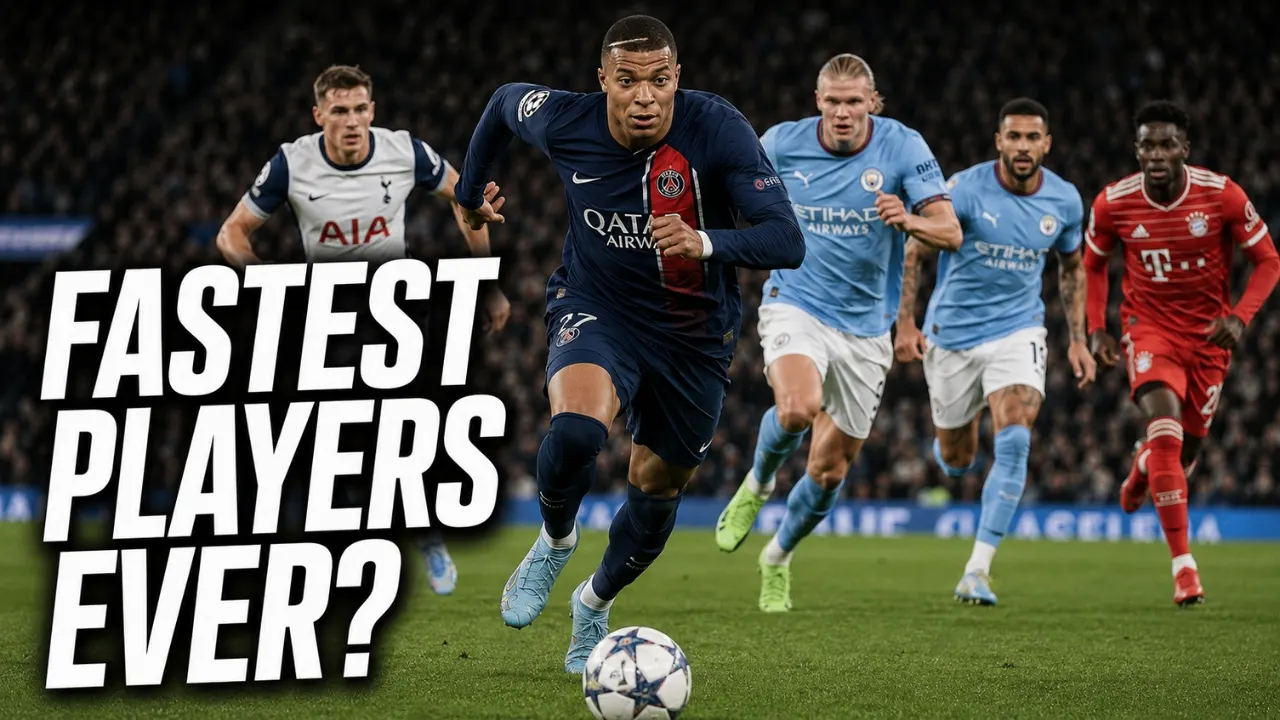
Modern tracking technology has revealed some of the fastest sprint speeds ever recorded in professional football.
Speed has always been one of football’s most valuable weapons. A player who can outrun defenders, recover possession quickly, or break away on the counterattack can change a match in seconds. Modern tracking technology has made it easier than ever to measure sprinting performance, allowing leagues, clubs, and analysts to record some of the fastest runs ever seen in professional football.
While speed alone does not guarantee success, many of the game’s most dangerous attackers and defenders have combined elite acceleration with technical quality and tactical intelligence. This guide examines the fastest recorded speeds in professional football, the players behind those numbers, and why raw pace remains a crucial part of the modern game.
Fastest Football Players Ever: Quick Summary
Official tracking data from major competitions has recorded several players exceeding 36 km/h in competitive matches. Micky van de Ven’s 37.38 km/h sprint for Tottenham Hotspur is among the highest publicly reported speeds in elite football, while players such as Kyle Walker, Chiedozie Ogbene, Anthony Elanga, and Erling Haaland have also produced exceptional speed figures.
Fastest Recorded Speeds in Professional Football
The table below includes verified speeds recorded through official league tracking systems and competition data.
| Player | Club (At Time of Record) | Competition | Recorded Speed |
|---|---|---|---|
| Micky van de Ven | Tottenham Hotspur | Premier League | 37.38 km/h |
| Chiedozie Ogbene | Luton Town | Premier League | 36.93 km/h |
| Anthony Elanga | Nottingham Forest | Premier League | 36.91 km/h |
| Kyle Walker | Manchester City | Premier League | 37.31 km/h |
| Erling Haaland | Manchester City | Premier League | 36.22 km/h |
Speeds listed are based on official competition tracking data released by the Premier League.
Many of the names featured in these records also appear in our Fastest Premier League Players in History, which takes a deeper look at the quickest players ever recorded in England’s top flight.
How Football Speed Is Measured
Years ago, claims about football’s fastest players were often based on observation rather than hard data. Today, that has changed significantly.
GPS Tracking Systems
Most professional clubs use GPS devices during training to monitor sprinting performance, workload, and recovery.
Optical Tracking Technology
Major leagues such as the Premier League, Bundesliga, and UEFA competitions use camera-based tracking systems that monitor every player’s movement throughout a match.
Why Different Numbers Exist
Fans often encounter conflicting speed records online.
This usually happens because:
- Different leagues use different tracking systems.
- Some speeds come from training sessions rather than matches.
- Certain records include short bursts while others measure sustained sprinting.
- Unofficial reports are sometimes repeated without verification.
For that reason, officially published competition data remains the most reliable source.
Why Pace Matters More Than Ever
Football has become faster over the past decade.
Modern tactical systems demand quick transitions, aggressive pressing, and rapid defensive recovery. Teams frequently cover more ground at higher intensity than previous generations.
Counterattacking Football
Many elite clubs rely on explosive transitions.
When possession changes hands, attackers often have only a few seconds to exploit space before defenders reorganize.
High Defensive Lines
Teams that defend far from their own goal require defenders with exceptional recovery speed.
Without pace, even well-organized defensive structures can become vulnerable to direct balls behind the back line.
Pressing Systems
Modern pressing requires players to repeatedly sprint over short distances throughout a match.
The ability to accelerate quickly is often more valuable than maintaining top speed over long distances.
The Fastest Defenders in Football
Defenders are often overlooked when discussions focus on speed.
In reality, some of the quickest players in football play at the back.
Micky van de Ven
Van de Ven’s record-breaking Premier League sprint demonstrated why Tottenham value his recovery speed so highly.
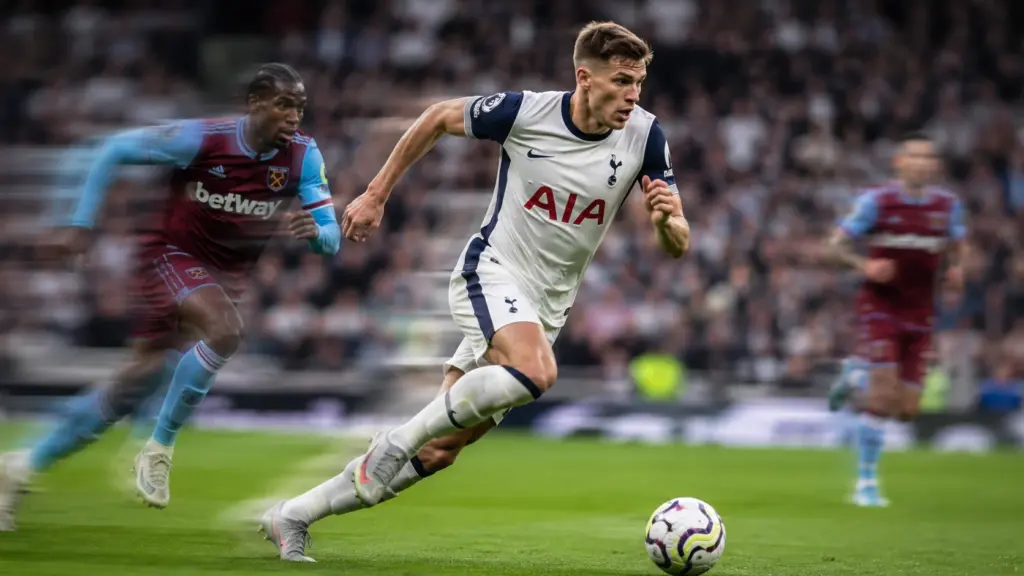
His pace allows Spurs to play an aggressive defensive line while maintaining protection against counterattacks.
Kyle Walker
For much of the last decade, Walker has been regarded as one of football’s fastest defenders.
His recovery runs became a defining feature of Manchester City’s defensive success under Pep Guardiola.
Alphonso Davies
Although often deployed as a full-back or wing-back, Davies remains among the quickest players in world football.
His acceleration and ability to cover large distances make him a constant threat at both ends of the pitch.
The Fastest Attackers in Football
Elite attackers often use speed differently from defenders.
Rather than focusing on recovery runs, attackers use pace to create separation, attack space, and break defensive lines.
Kylian Mbappé
Few players combine pace and finishing ability as effectively as Mbappé.
His explosive acceleration has become one of the defining traits of modern football.
Erling Haaland
Haaland’s speed often surprises casual viewers because of his physical frame.
Standing over six feet tall, he combines power with elite sprinting ability, making him exceptionally difficult to defend in open space.
Vinícius Júnior
Real Madrid’s winger remains one of the most dangerous transition players in football.
His acceleration, close control, and ability to beat defenders at speed make him a constant threat in one-on-one situations.
Speed vs Acceleration: What’s More Important?
Top speed receives most of the attention, but acceleration often has a greater impact during matches.
A player who reaches full speed quickly can create advantages in tight spaces before opponents have time to react.
For that reason, many coaches prioritize:
- First-step explosiveness
- Reaction speed
- Agility
- Direction changes
- Sprint repetition
These qualities frequently influence matches more than maximum sprint velocity alone.
Historical Speed Records and Why Comparisons Are Difficult
Comparing football speed across different eras is not always straightforward.
Modern leagues use sophisticated optical tracking systems that record player movement dozens of times per second. Earlier generations of players did not have access to the same technology, making direct comparisons difficult.
That means legendary fast players such as Ronaldo Nazário, Thierry Henry, Gareth Bale, Arjen Robben, and Cristiano Ronaldo were rarely measured under the same conditions as today’s stars.
As a result, verified speed records tend to favor modern players because more reliable tracking data is available.
Why Comparing Different Eras Is Difficult
Modern football benefits from advanced tracking systems that record player movement throughout matches, while earlier generations relied largely on observation and match footage. Because measurement methods have changed significantly over time, direct comparisons between historical and modern players should always be viewed with caution.
Fastest Players by Position
Speed matters differently depending on where a player operates on the pitch.
| Position | Why Speed Matters |
|---|---|
| Center Back | Recovery runs, defending counterattacks |
| Full Back | Overlapping runs, defensive coverage |
| Winger | Beating defenders, creating chances |
| Striker | Attacking space behind defenses |
| Midfielder | Pressing, transitions, ball recovery |
This explains why many of football’s fastest recorded players are either wide attackers or defenders.
How Modern Football Develops Speed
Raw pace is not purely genetic.
Professional clubs invest heavily in performance science to maximize sprinting ability.
Strength and Power Training
Players regularly perform exercises focused on explosive movement, including:
- Sprint drills
- Plyometrics
- Olympic lifting variations
- Resistance training
The goal is to improve force production during acceleration.
Sports Science Monitoring
GPS and tracking systems help clubs understand how players move during both training and matches.
Performance departments can monitor:
- Sprint frequency
- Peak speed
- Distance covered
- Recovery metrics
- Fatigue levels
This information allows coaches to balance performance and injury prevention.
Sprint Mechanics
Elite clubs also work on running technique.
Small improvements in posture, stride efficiency, and acceleration mechanics can produce measurable gains over a season.
Fastest Football Players of the Modern Era
While official records vary between competitions, these players are widely recognized among the quickest footballers of the modern era:
| Player | Position |
|---|---|
| Kylian Mbappé | Forward |
| Micky van de Ven | Defender |
| Kyle Walker | Defender |
| Alphonso Davies | Full Back |
| Erling Haaland | Striker |
| Vinícius Júnior | Winger |
| Gareth Bale | Former Winger |
| Arjen Robben | Former Winger |
Each player used pace differently, but all became elite performers partly because of their ability to outrun opponents in key moments.
While official speed records provide valuable data, overall impact on the pitch matters just as much. Several of these stars are also featured in our 20 Fastest Football Players of All Time Ranked (2025).
Common Misconceptions About Football Speed
Fastest Sprint Equals Best Player
Speed can be a major advantage, but it does not automatically make a player world-class.
Football still depends on:
- Decision-making
- Positioning
- Technique
- Tactical understanding
- Composure
The best players combine physical tools with football intelligence.
Wingers Are Always the Fastest
Although many rapid players operate in wide positions, defenders frequently record some of the highest sprint speeds in professional football.
Recovery runs often require center backs and full backs to reach maximum velocity.
Older Players Cannot Be Fast
While peak sprinting ability generally declines with age, many experienced players maintain impressive speed through conditioning, recovery programs, and intelligent movement.
Why Speed Statistics Should Be Viewed Carefully
Not all speed records are measured under identical conditions.
Several factors can influence results:
- Tracking technology used
- Weather conditions
- Match situation
- Sprint distance
- Ball possession
- Fatigue levels
Because of these variables, a recorded top speed represents a snapshot rather than a complete evaluation of a player’s athletic ability.
For analysts, repeated sprint performance is often more valuable than a single peak speed measurement.
Key Takeaways
- Micky van de Ven currently holds one of the fastest officially recorded sprint speeds in major professional football competitions.
- Modern tracking technology has improved the accuracy of speed measurement.
- Acceleration is often more important than maximum sprint speed during matches.
- Defenders regularly rank among football’s fastest players.
- Elite pace remains a major tactical weapon in pressing systems, counterattacks, and defensive recovery.
- Sports science and performance analysis play a significant role in developing sprinting ability.
Final Thoughts
Speed has always been part of football, but modern technology has changed how it is measured and understood. Today’s tracking systems provide a clearer picture of the physical demands placed on elite players and allow fans to appreciate just how extraordinary some athletes have become.
The fastest players in football are not simply sprinters in football boots. What separates them is their ability to apply pace within the flow of a match—timing runs, recovering defensively, creating separation from opponents, and making decisive contributions when space opens up.
As performance analysis continues to evolve, speed records will likely keep falling. What will remain constant is the value of pace as one of football’s most influential attributes.
FAQ
Who is the fastest football player ever recorded?
Based on officially published data from major competitions, Tottenham Hotspur defender Micky van de Ven recorded a sprint speed of 37.38 km/h during the 2023-24 Premier League season.
Is Kylian Mbappé faster than Erling Haaland?
Both players rank among football’s quickest attackers. Exact comparisons vary depending on the tracking system and specific match measurements.
How is player speed measured in football?
Professional competitions use optical tracking systems and performance technology that monitor player movement throughout matches.
Why are defenders often among the fastest players?
Modern tactical systems require defenders to recover quickly when opponents attack in transition, making speed a critical defensive attribute.
Is acceleration more important than top speed?
In many match situations, acceleration is more valuable because players rarely sprint over long distances before needing to change direction or react to the ball.
Do football players train specifically for speed?
Yes. Professional clubs use sprint training, strength programs, sports science monitoring, and running mechanics coaching to improve speed and acceleration.
Sources Used
- Stats Perform
- Premier League Official Player Tracking Data
- FIFA Performance Analysis Reports
- UEFA Technical Reports
- Bundesliga Match Data and Tracking Statistics
- BBC Sport
- Sky Sports
- ESPN FC
- Reuters
- Opta Sports
About the Author