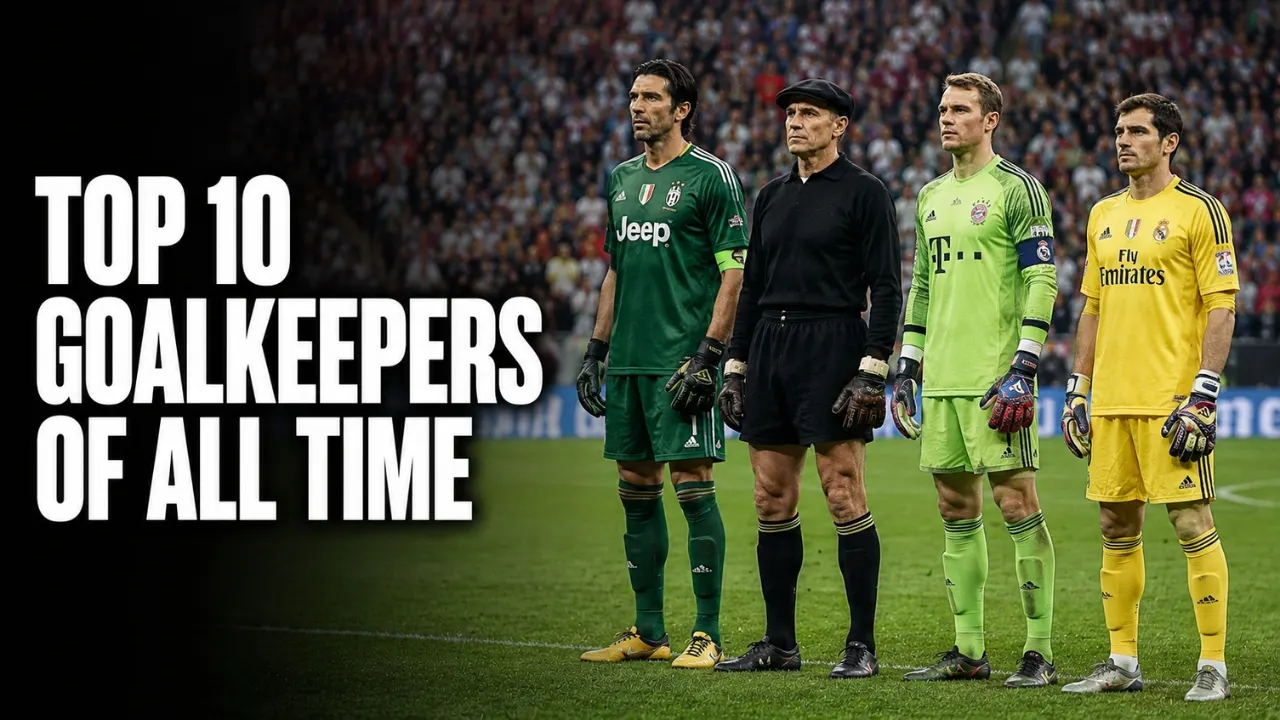
From Lev Yashin to Manuel Neuer, these are the greatest goalkeepers ever to play the game.
Goalkeepers rarely receive the same attention as prolific strikers or creative midfielders, yet football history has been shaped by extraordinary players between the posts. From World Cup-winning legends to modern shot-stopping specialists, the game’s greatest goalkeepers have defined eras, rescued teams in decisive moments, and redefined what the position demands.
Ranking the greatest goalkeepers in football history is never straightforward. Different generations operated under different tactical systems, rules, and expectations. Some dominated through reflexes and athleticism, while others transformed the position with leadership, distribution, and command of the penalty area.
This ranking considers achievements, longevity, influence on the game, individual awards, consistency, and performances in the sport’s biggest competitions.
Quick Answer
| Rank | Goalkeeper | Country |
|---|---|---|
| 1 | Lev Yashin | Soviet Union |
| 2 | Gianluigi Buffon | Italy |
| 3 | Manuel Neuer | Germany |
| 4 | Iker Casillas | Spain |
| 5 | Dino Zoff | Italy |
| 6 | Peter Schmeichel | Denmark |
| 7 | Gordon Banks | England |
| 8 | Oliver Kahn | Germany |
| 9 | Edwin van der Sar | Netherlands |
| 10 | Sepp Maier | Germany |
Ranking Criteria
Several factors were considered when compiling this list:
- Major trophies won
- International achievements
- Individual awards
- Longevity at elite level
- Influence on goalkeeping evolution
- Consistency across multiple seasons
- Performance in high-pressure matches
The ranking prioritizes complete careers rather than isolated peaks.
Because goalkeeping responsibilities have evolved significantly across different eras, this ranking places particular emphasis on overall influence, consistency, and impact relative to each player’s generation.
The 10 Best Goalkeepers of All Time
10. Sepp Maier
Country: Germany
Sepp Maier was the backbone of Bayern Munich and West Germany during one of the most successful periods in German football history.
Known for his remarkable consistency and agility, Maier helped Bayern win multiple Bundesliga titles and three consecutive European Cups between 1974 and 1976. Internationally, he won both the UEFA European Championship and the FIFA World Cup with West Germany.
His longevity was equally impressive, making more than 500 Bundesliga appearances for Bayern.
Key Achievements
| Achievement | Details |
|---|---|
| FIFA World Cup | 1974 Winner |
| UEFA Euro | 1972 Winner |
| European Cups | 3 |
| Bundesliga Titles | Multiple |
9. Edwin van der Sar
Country: Netherlands
Few goalkeepers have maintained elite standards across as many different eras as Edwin van der Sar.
After winning the UEFA Champions League with Ajax in 1995, he later became a central figure in Manchester United’s success under Sir Alex Ferguson. His calmness under pressure and ability to play with the ball at his feet made him a precursor to many modern goalkeepers.
Van der Sar also held the Premier League clean-sheet record for several years after an extraordinary run during the 2008-09 season.
Why He Stands Out
- Elite longevity
- Success in multiple leagues
- Exceptional composure
- Strong distribution skills
8. Oliver Kahn
Country: Germany
Competitive intensity defined Oliver Kahn’s career.
The former Bayern Munich captain combined elite reflexes with unmatched competitiveness. He became one of football’s most feared goalkeepers thanks to his commanding presence and relentless desire to win.
His greatest individual achievement came during the 2002 FIFA World Cup, where he became the first goalkeeper in history to win the tournament’s Golden Ball award despite Germany finishing as runners-up.
Career Highlights
| Achievement | Details |
|---|---|
| World Cup Golden Ball | 2002 |
| UEFA Champions League | 2001 |
| Bundesliga Titles | 8 |
| Germany Appearances | 86 |
7. Gordon Banks
Country: England
Gordon Banks remains synonymous with one moment.
His stunning save from Pelé during the 1970 FIFA World Cup is frequently described as the greatest save ever made. Yet reducing Banks to a single moment would overlook an exceptional career.
He played a vital role in England’s 1966 World Cup triumph and established himself as one of the safest and most technically complete goalkeepers of his era.
Why Banks Matters
Banks demonstrated that elite goalkeeping is about positioning and decision-making as much as athleticism.
Many modern coaching principles still reference techniques that he executed decades ago.
6. Peter Schmeichel
Country: Denmark
Peter Schmeichel revolutionized Premier League goalkeeping.
His combination of size, reflexes, leadership, and shot-stopping ability helped Manchester United dominate English football throughout the 1990s.
Schmeichel also produced one of international football’s greatest underdog stories by helping Denmark win UEFA Euro 1992.
Major Honors
| Competition | Achievement |
|---|---|
| UEFA Euro | 1992 Winner |
| UEFA Champions League | 1999 Winner |
| Premier League | 5 Titles |
| FA Cup | 3 Titles |
5. Dino Zoff
Country: Italy
Dino Zoff’s career remains one of football’s strongest examples of consistency and longevity.
The Italian goalkeeper remained at the highest level well into his forties and captained Italy to the 1982 FIFA World Cup title at age 40, making him the oldest World Cup-winning captain in history.
His composure, leadership, and reliability helped define Italian defending for nearly two decades.
What Made Zoff Special
- Exceptional longevity
- Leadership qualities
- World Cup-winning captain
- Tactical intelligence
Comparing the Legends
| Goalkeeper | World Cup Winner | Champions League/European Cup Winner | Major Individual Recognition |
|---|---|---|---|
| Sepp Maier | Yes | Yes | Multiple German Awards |
| Van der Sar | No | Yes | UEFA Goalkeeper Honors |
| Oliver Kahn | No | Yes | World Cup Golden Ball |
| Gordon Banks | Yes | No | FIFA Goalkeeper Recognition |
| Peter Schmeichel | No | Yes | IFFHS Awards |
| Dino Zoff | Yes | No | Multiple International Honors |
Why Goalkeeping Has Changed
The role of a goalkeeper today differs significantly from previous generations.
Modern keepers are expected to:
- Build attacks from the back
- Act as sweepers behind defensive lines
- Contribute in possession
- Play accurate long passes
- Remain comfortable under intense pressing
This evolution makes comparing eras difficult and explains why some modern names rank differently from legendary predecessors.
While modern goalkeepers are expected to contribute more in possession, shot-stopping, leadership, positioning, and decision-making remain the core qualities shared by every goalkeeper on this list.
4. Iker Casillas
Country: Spain
Few goalkeepers have collected more significant trophies than Iker Casillas.
A product of Real Madrid’s academy, Casillas became the face of one of the club’s most successful modern eras while also serving as captain during Spain’s golden generation. His reflexes, composure, and ability to produce decisive saves in high-pressure moments made him one of football’s most dependable goalkeepers.
Casillas helped Spain win UEFA Euro 2008, the 2010 FIFA World Cup, and UEFA Euro 2012, becoming a central figure in one of the greatest international teams ever assembled.
International tournaments often define a player’s legacy, and Spain’s dominance during Casillas’ era remains one of the benchmarks against which great international teams are still measured today. That success continues to shape discussions around future global tournaments, including the FIFA World Cup 2026.
Major Achievements
| Achievement | Details |
|---|---|
| FIFA World Cup | 2010 Winner |
| UEFA European Championship | 2008, 2012 Winner |
| UEFA Champions League | 3 Titles |
| Spain Appearances | 167 |
Why He Ranks So Highly
Casillas consistently delivered on football’s biggest stages. His performances in major finals and knockout matches remain among the strongest resumes any goalkeeper has ever built.
3. Manuel Neuer
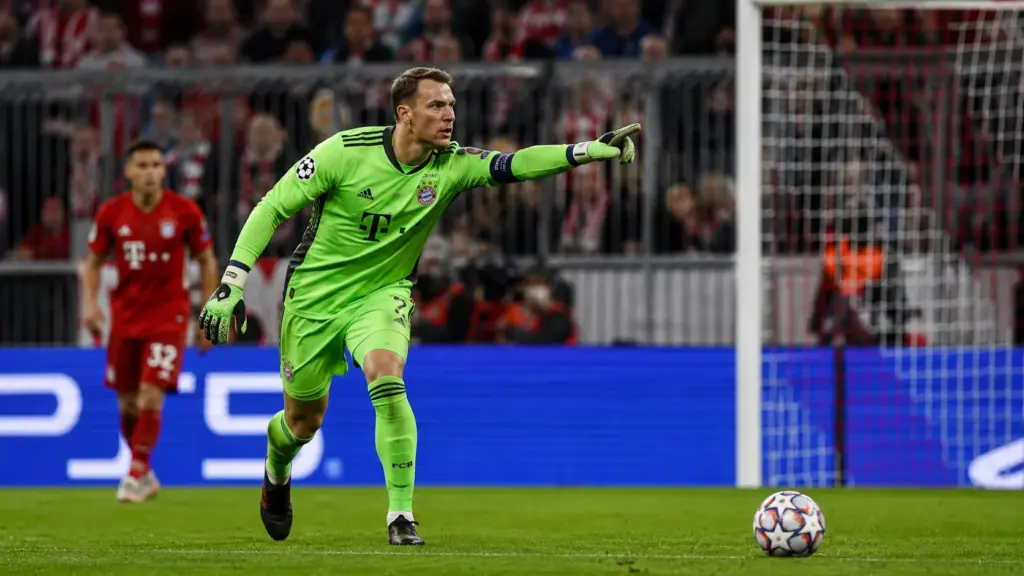
Country: Germany
Manuel Neuer changed how football views the goalkeeper position.
Before Neuer, elite goalkeepers were primarily judged on shot-stopping and command of the penalty area. The German international expanded the role by becoming an active part of his team’s build-up play and defensive structure.
His performances during Germany’s 2014 FIFA World Cup triumph showcased the concept of the “sweeper-keeper” at the highest level. Neuer regularly operated far outside his penalty area, helping Germany maintain an aggressive defensive line without sacrificing security.
Career Highlights
| Achievement | Details |
|---|---|
| FIFA World Cup | 2014 Winner |
| UEFA Champions League | Multiple Titles |
| Bundesliga Titles | Multiple |
| IFFHS World’s Best Goalkeeper | Multiple Awards |
Lasting Influence
Modern goalkeepers at every level now face expectations that were once considered unusual. Much of that tactical evolution can be traced back to Neuer’s success.
2. Gianluigi Buffon
Country: Italy
Gianluigi Buffon spent more than two decades competing at the highest level.
Debuting professionally as a teenager, he remained an elite goalkeeper into his forties, a level of longevity almost unmatched in football history. Buffon combined athleticism, positioning, leadership, and consistency better than almost any goalkeeper before him.
He won the 2006 FIFA World Cup with Italy and became one of the defining figures of Juventus’ modern history. While the UEFA Champions League remained the one major trophy that eluded him, Buffon’s overall body of work remains extraordinary.
Career Achievements
| Achievement | Details |
|---|---|
| FIFA World Cup | 2006 Winner |
| Serie A Titles | Multiple |
| Italy Appearances | 176 |
| Professional Career | More than 25 Years |
Why Buffon Is Considered a Goalkeeping Icon
Very few players maintain world-class standards across multiple generations. Buffon successfully adapted to tactical changes, rule changes, and evolving styles of play while remaining among the world’s best.
1. Lev Yashin
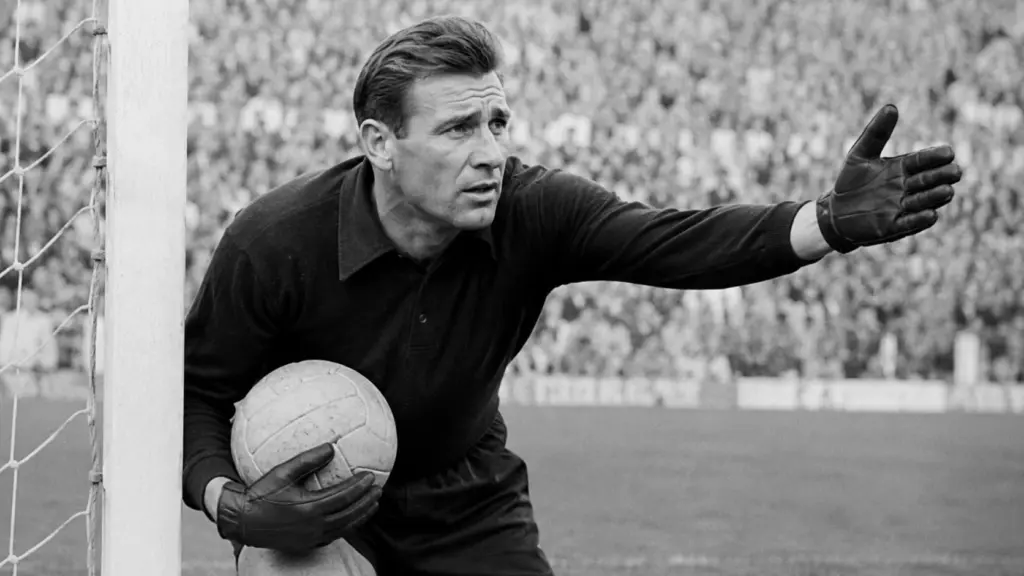
Country: Soviet Union
No goalkeeper has influenced football more than Lev Yashin.
Nicknamed “The Black Spider” because of his all-black kit and extraordinary reach, Yashin transformed the position decades before modern tactical innovations emerged. He regularly organized defenses, claimed crosses aggressively, and initiated attacks at a time when goalkeepers were expected to remain largely passive.
His legacy is unmatched in one crucial area: he remains the only goalkeeper in history to win the Ballon d’Or, receiving the award in 1963.
Major Achievements
| Achievement | Details |
|---|---|
| Ballon d’Or | 1963 Winner |
| Olympic Gold Medal | 1956 |
| European Championship | 1960 Winner |
| Soviet League Titles | Multiple |
Why Lev Yashin Remains No. 1
The greatest players do more than succeed; they redefine expectations.
Yashin’s impact on goalkeeping fundamentals can still be seen today. Decades after his retirement, coaches continue to reference techniques and principles that he helped popularize.
For influence, innovation, and excellence, no goalkeeper has matched his overall legacy.
Full Ranking Table
| Rank | Goalkeeper | Country |
|---|---|---|
| 1 | Lev Yashin | Soviet Union |
| 2 | Gianluigi Buffon | Italy |
| 3 | Manuel Neuer | Germany |
| 4 | Iker Casillas | Spain |
| 5 | Dino Zoff | Italy |
| 6 | Peter Schmeichel | Denmark |
| 7 | Gordon Banks | England |
| 8 | Oliver Kahn | Germany |
| 9 | Edwin van der Sar | Netherlands |
| 10 | Sepp Maier | Germany |
Common Misconceptions About Goalkeeping Greatness
Trophies Alone Determine Greatness
Team success matters, but goalkeepers often depend heavily on the quality of the squad in front of them. Individual influence, consistency, and performance level should also be considered.
Modern Goalkeepers Are Automatically Better
Advancements in coaching, sports science, and tactics have improved modern players. However, earlier legends succeeded under very different conditions and often helped shape the standards used today.
Shot-Stopping Is the Only Important Skill
Elite goalkeeping involves positioning, communication, leadership, distribution, decision-making, and handling pressure. Great goalkeepers influence matches even when they are not making spectacular saves.
Key Takeaways
- Lev Yashin remains the only goalkeeper to win the Ballon d’Or.
- Gianluigi Buffon combined elite performance with extraordinary longevity.
- Manuel Neuer transformed the modern goalkeeper role.
- Iker Casillas captained Spain during one of international football’s greatest eras.
- Dino Zoff remains the oldest World Cup-winning captain.
- Peter Schmeichel and Oliver Kahn were defining goalkeepers of the 1990s and early 2000s.
- Gordon Banks produced what many consider the greatest save in football history.
- Goalkeeping greatness cannot be judged solely by trophies.
Football history is ultimately shaped by players who leave a lasting impact on how the game is played. Goalkeepers, midfielders, defenders, and forwards all contribute in different ways, which is why debates about greatness often extend beyond individual positions to discussions about the best football players in the world right now.
Final Thoughts
Comparing goalkeepers across different generations will always spark debate. Changes in tactics, equipment, training methods, and the overall speed of the game make direct comparisons challenging.
Even so, certain names consistently stand above the rest. Lev Yashin’s influence, Gianluigi Buffon’s longevity, Manuel Neuer’s innovation, and Iker Casillas’ success on football’s biggest stages have secured their places among the game’s all-time greats.
Every goalkeeper on this list left a lasting mark on football history. Their achievements helped shape how the position is played, coached, and understood today.
FAQ
Who is considered the greatest goalkeeper of all time?
Many football historians and analysts regard Lev Yashin as the greatest goalkeeper ever. He remains the only goalkeeper to win the Ballon d’Or.
Has a goalkeeper ever won the Ballon d’Or?
Yes. Lev Yashin won the Ballon d’Or in 1963 and remains the only goalkeeper to receive the award.
Who has the most international appearances among goalkeepers?
Gianluigi Buffon ranks among the most-capped goalkeepers in international football history with 176 appearances for Italy.
Why is Manuel Neuer so influential?
Neuer popularized the modern sweeper-keeper role, combining elite shot-stopping with exceptional distribution and defensive positioning outside the penalty area.
Did Iker Casillas win the World Cup?
Yes. Casillas captained Spain to victory at the 2010 FIFA World Cup and also won UEFA Euro 2008 and UEFA Euro 2012.
Who was England’s greatest goalkeeper?
Many experts consider Gordon Banks England’s greatest goalkeeper, particularly because of his role in the nation’s 1966 FIFA World Cup triumph.
Sources
- Italian Football Federation (FIGC)
- FIFA
- UEFA
- Ballon d’Or Official Records
- International Federation of Football History & Statistics (IFFHS)
- Real Madrid CF
- FC Bayern Munich
- Juventus FC
- Manchester United FC
- England Football
- Deutscher Fußball-Bund (DFB)
- Royal Spanish Football Federation (RFEF)
About the Author