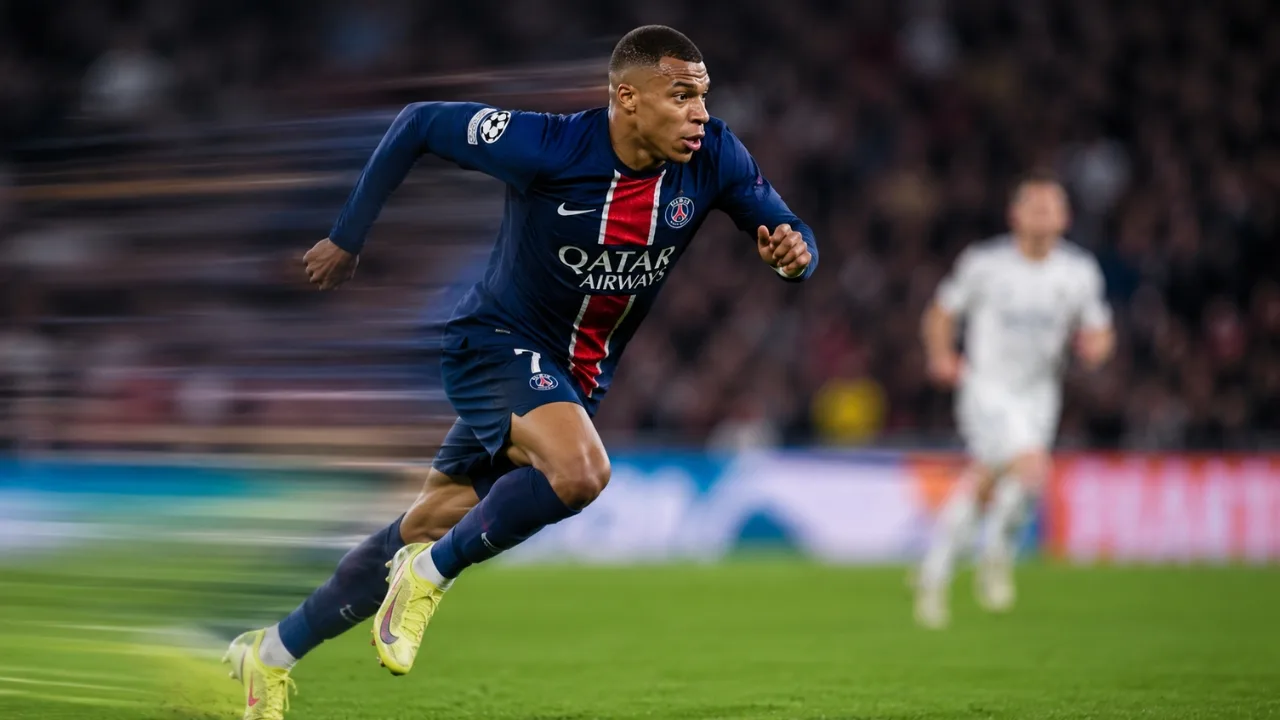
Mbappe is widely regarded as one of the fastest attacking players in world football.
Football has always celebrated speed. From defenders chasing down counterattacks to wingers racing past full-backs, pace can change matches in an instant. Yet one question continues to spark debate among fans: who is the fastest football player ever?
The answer is more complicated than simply looking at a stopwatch. Different leagues use different tracking technologies, and not every era recorded sprint data the same way. Still, modern performance tracking has provided reliable evidence that allows us to identify the fastest speeds officially recorded in professional football. Here’s what the data shows and how today’s speed kings compare with some of the game’s most explosive athletes.
Fastest Football Players Ever: Quick Summary
Based on officially reported match-tracking data, several players have recorded sprint speeds above 36 km/h in professional football. However, speed records can vary depending on the competition, tracking technology, and data provider, making direct comparisons difficult.
However, several players, including Micky van de Ven, Kyle Walker, Kylian Mbappé, Alphonso Davies, and Achraf Hakimi, have also recorded extraordinary sprint speeds through official tracking systems.
Why Measuring Football Speed Is Difficult
Unlike track and field, football speed is rarely measured under identical conditions.
Several factors influence recorded sprint numbers:
- Different tracking technologies
- Distance covered before reaching top speed
- Ball possession versus off-ball running
- Match conditions
- Data collection methods across leagues
As a result, comparing players from different eras can be challenging. Legendary speedsters from previous decades rarely had access to the advanced GPS and optical tracking systems used today.
What Counts as an Official Speed Record?
For a speed record to be considered reliable, it should come from:
- Official league tracking systems
- FIFA-approved tournament data
- Club performance technology
- Verified competition statistics
Unofficial claims often circulate on social media, with some players reportedly reaching impossible speeds exceeding 40 km/h. Unless supported by official tracking data, those figures should be treated with caution.
Fastest Officially Recorded Football Speeds
The following table includes some of the fastest verified sprint speeds reported through major professional competitions and official tracking systems.
| Player | Recorded Speed | Competition |
|---|---|---|
| Sven Botman | 39.21 km/h | Premier League |
| Micky van de Ven | 37.38 km/h | Premier League |
| Kyle Walker | 37.31 km/h | Premier League |
| Chiedozie Ogbene | 36.93 km/h | Premier League |
| Dominik Szoboszlai | 36.76 km/h | Premier League |
| Kylian Mbappé | 36 km/h+ | FIFA World Cup / Ligue 1 tracking |
| Achraf Hakimi | 36 km/h+ | FIFA World Cup |
| Alphonso Davies | 36.5 km/h | Bundesliga |
Recorded figures depend on official league and competition tracking systems available at the time of publication.
Why Speed Records Often Change
Football speed records are constantly updated as leagues improve tracking technology and collect more detailed performance data. A player’s recorded top speed may also vary depending on match conditions, sprint distance, and the technology used to measure movement during games.
Sven Botman and the Current Record Debate
The discussion around football’s fastest player changed significantly after Premier League tracking data showed Newcastle United’s Sven Botman reaching 39.21 km/h.
For many supporters, the result was surprising.
Botman is primarily known as a central defender rather than an attacking speedster. Yet modern tracking technology measures actual match situations rather than reputation. The data suggested that during a specific sprint sequence, Botman reached a speed rarely seen in professional football.
What makes the figure particularly notable is that it exceeded speeds previously associated with elite full-backs and wingers.
The Case for Micky van de Ven
Tottenham Hotspur defender Micky van de Ven deserves a prominent place in any discussion about football’s fastest players.
During the 2023-24 Premier League season, official tracking recorded him at 37.38 km/h, setting a Premier League benchmark at the time.
Van de Ven’s recovery pace has become one of Tottenham’s biggest defensive weapons. His ability to chase down attackers allows Spurs to play with a higher defensive line than many rivals.
Unlike some players who produce a single remarkable sprint, Van de Ven consistently demonstrates elite speed throughout matches.
Kylian Mbappé: The Fastest Attacker?
When fans discuss speed in football, Kylian Mbappé is usually the first name mentioned.
Mbappé’s pace is only one reason he is widely regarded as one of football’s elite performers. Readers interested in learning more can also explore Best Football Players in the World Right Now (2025 Rankings), where we break down the top players currently dominating world football.
The French superstar has repeatedly produced breathtaking acceleration in the UEFA Champions League, FIFA World Cup, and domestic competitions.
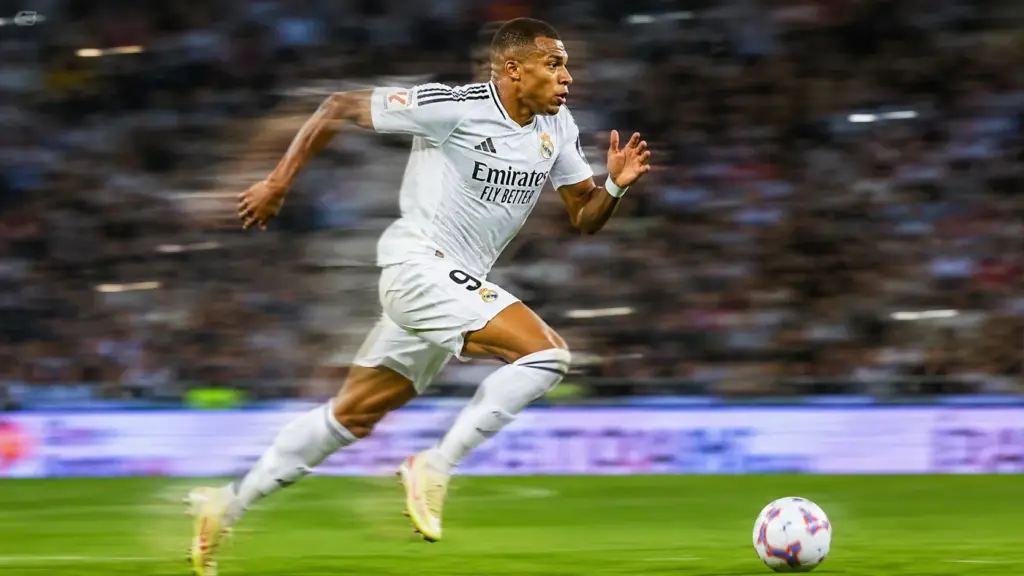
One of the most famous examples came during the 2022 FIFA World Cup, where his explosive bursts consistently troubled defenders. FIFA tracking data and league measurements have regularly placed Mbappé among the fastest players in elite football.
What Makes Mbappé Different?
Top speed is only part of the story.
Mbappé combines:
- Elite acceleration
- Rapid direction changes
- Ball-carrying speed
- Finishing ability at full pace
Many players can sprint quickly in a straight line. Far fewer can maintain control of the ball while moving at near-maximum speed.
Alphonso Davies and the Bundesliga Benchmark
Bayern Munich’s Alphonso Davies has built his reputation around explosive pace.
The Canadian international has repeatedly ranked among the Bundesliga’s fastest players, with official league tracking recording speeds above 36 km/h.
Davies’ recovery speed allows him to contribute both offensively and defensively, making him one of the most dynamic full-backs in world football.
His famous recovery run against Erling Haaland while playing for Bayern remains one of the most widely viewed examples of elite football speed.
Speed vs Acceleration: Why the Difference Matters
Fans often focus solely on maximum speed.
In reality, acceleration may be even more important.
A player who reaches 34 km/h within a few steps can often be more dangerous than someone who eventually reaches 37 km/h after a longer sprint.
This is why players such as Lionel Messi, Mohamed Salah, and Eden Hazard were so difficult to defend against during their peaks. Their first few yards frequently mattered more than their ultimate top speed.
Fastest Football Players by Position
Speed is valuable across the pitch, but it serves different purposes depending on a player’s role.
| Position | Notable Speedsters |
|---|---|
| Goalkeeper | Manuel Neuer (for sweeping actions) |
| Center Back | Sven Botman, Micky van de Ven |
| Full-Back | Alphonso Davies, Achraf Hakimi, Kyle Walker |
| Midfielder | Dominik Szoboszlai, Federico Valverde |
| Winger | Kylian Mbappé, Vinícius Júnior |
| Striker | Erling Haaland, Victor Osimhen |
Modern football increasingly demands athleticism from every position. Center-backs are now expected to defend large spaces, while full-backs regularly cover the length of the pitch.
Historical Speedsters Before Tracking Technology
One challenge when discussing the fastest footballer ever is that many legendary players competed before advanced tracking systems existed.
Ronaldo Nazário
During the late 1990s and early 2000s, Ronaldo combined extraordinary acceleration with elite technical ability. Many defenders described him as nearly impossible to stop once he reached full stride.
Thierry Henry
Henry’s pace was a defining feature of Arsenal’s success under Arsène Wenger. His long stride and smooth running style often made him appear effortless, even when pulling away from defenders.
Gareth Bale
Bale produced some of football’s most memorable speed-based moments. His famous sprint past Marc Bartra in the 2014 Copa del Rey final remains one of the clearest examples of raw pace changing a match.
Cristiano Ronaldo
Throughout his Manchester United, Real Madrid, and Juventus careers, Ronaldo consistently demonstrated elite sprinting ability. His physical conditioning allowed him to remain one of football’s most explosive athletes well into his thirties.
Even in the later stages of his career, Ronaldo continues to make headlines through remarkable consistency and goal-scoring performances. Readers interested in his recent form can also explore Cristiano Ronaldo Scores Again as Al Nassr Extend Winning Streak to 20 Matches for the latest updates.
Because official speed data was not widely available during much of their careers, direct comparisons with modern players remain difficult.
The Fastest Footballers in International Tournaments
Major international tournaments have also produced remarkable sprint numbers.
Kylian Mbappé
The France forward has repeatedly ranked among the fastest players at FIFA World Cup tournaments. His acceleration and ability to attack open space remain central to his game.
Achraf Hakimi
The Morocco international consistently records some of the highest sprint speeds in world football. His performances at the 2022 FIFA World Cup highlighted how pace can influence both attacking and defensive phases.
Alphonso Davies
Representing Canada, Davies combines speed with endurance, making him one of international football’s most dangerous transition players.
Common Myths About Football Speed Records
Myth 1: The Fastest Player Is Always the Best Athlete
Not necessarily.
Football requires a combination of speed, stamina, strength, technique, decision-making, and tactical awareness. Pure sprinting ability alone does not guarantee success.
Myth 2: Attackers Are Always Faster Than Defenders
Modern tracking data often proves otherwise.
Defenders such as Sven Botman, Micky van de Ven, Kyle Walker, and Alphonso Davies have recorded speeds that rival or exceed many attacking players.
Myth 3: Older Footballers Were Slower
There is no reliable evidence to support that claim.
Players from previous generations may have been just as fast, but the technology to measure and verify those speeds simply did not exist.
Myth 4: Viral Social Media Speed Claims Are Accurate
Many widely shared speed records are unverified.
Unless a figure comes from an official league, FIFA, UEFA, club tracking system, or another trusted source, it should be treated cautiously.
How Football Speed Is Measured Today
Professional clubs now use sophisticated technology to monitor player performance.
Common systems include:
- Optical tracking cameras
- GPS performance vests during training
- Wearable performance sensors
- Stadium-based tracking systems
- Competition data platforms
These tools provide detailed information about:
- Sprint distance
- Maximum speed
- Acceleration
- Deceleration
- High-intensity runs
- Total distance covered
As technology improves, future records may become even more accurate.
The Future of Football Performance Tracking
Modern tracking systems now measure far more than top speed. Clubs and analysts use performance data to monitor acceleration, recovery runs, workload management, and injury prevention, providing a more complete picture of an athlete’s physical performance than sprint speed alone.
Who Is the Fastest Football Player Ever?
The answer depends on how the question is framed.
| Category | Player |
|---|---|
| Fastest Verified Match Speed | Sven Botman |
| Fastest Premier League Sprint (historically tracked) | Micky van de Ven |
| Fastest Modern Attacker | Kylian Mbappé |
| Fastest Full-Back | Alphonso Davies / Achraf Hakimi |
| Most Famous Speedster | Gareth Bale |
| Fastest Historical Superstar | Ronaldo Nazário (widely regarded) |
Official tracking data provides the most reliable method for comparing football speed, but records can vary across leagues and competitions. While several modern players have recorded exceptional sprint speeds, comparing athletes from different eras remains difficult because tracking technology was not widely available throughout much of football history.
At the same time, football fans will continue debating whether players such as Mbappé, Davies, Bale, or Ronaldo Nazário would have produced even greater numbers under identical testing conditions.
Key Takeaways
- Official speed records rely on verified tracking technology rather than estimates.
- Sven Botman’s recorded sprint of 39.21 km/h is among the fastest officially reported speeds in football.
- Micky van de Ven, Kyle Walker, Alphonso Davies, Achraf Hakimi, and Kylian Mbappé rank among the sport’s quickest players.
- Acceleration is often more valuable than maximum speed during matches.
- Historical players such as Ronaldo Nazário, Thierry Henry, Gareth Bale, and Cristiano Ronaldo lacked the advanced tracking systems available today.
- Football speed records should be evaluated using official competition data whenever possible.
Final Thoughts
Football’s fastest player debate is unlikely to disappear anytime soon, and that’s part of the appeal. Speed has always fascinated supporters because it can completely change the dynamics of a match.
Based on publicly reported tracking data available at the time of writing, Sven Botman has recorded one of the highest officially reported sprint speeds in professional football. However, football speed records vary across competitions, tracking systems and reporting methodologies.
The fastest footballer ever may ultimately depend on whether you value recorded numbers, acceleration, ball-carrying ability, or historical reputation. What remains beyond dispute is that elite pace continues to be one of the most valuable weapons in modern football.
FAQ
Who is the fastest football player ever?
Based on verified match-tracking data, Sven Botman has recorded one of the fastest officially measured sprint speeds in professional football at 39.21 km/h.
What is the fastest speed ever recorded in football?
One of the highest officially reported match speeds is 39.21 km/h, recorded by Sven Botman through Premier League tracking data.
Is Kylian Mbappé the fastest football player?
Mbappé is among the fastest attackers in world football, but available official tracking data suggests other players have recorded higher top speeds.
Who is faster, Alphonso Davies or Kylian Mbappé?
Both players have recorded speeds above 36 km/h in official competitions. Exact comparisons vary depending on the specific match and tracking system used.
Was Gareth Bale faster than Mbappé?
Direct comparisons are difficult because much of Bale’s career occurred before widespread tracking technology became available. Both players are widely regarded as among football’s quickest athletes.
Why do different sources report different speed records?
Different leagues and competitions use different tracking systems and methodologies, which can produce slightly different results.
Sources Used
- PremierLeague.com
- FIFA
- Premier League Official Website
- Premier League Official Tracking Data & Statistics
- Bundesliga Official Statistics
- UEFA Competition Data
- MLS Performance Data
- BBC Sport
- Sky Sports
- Reuters
- ESPN FC
- The Athletic
- Opta Sports / Opta Analyst
- Bundesliga.com
About the Author