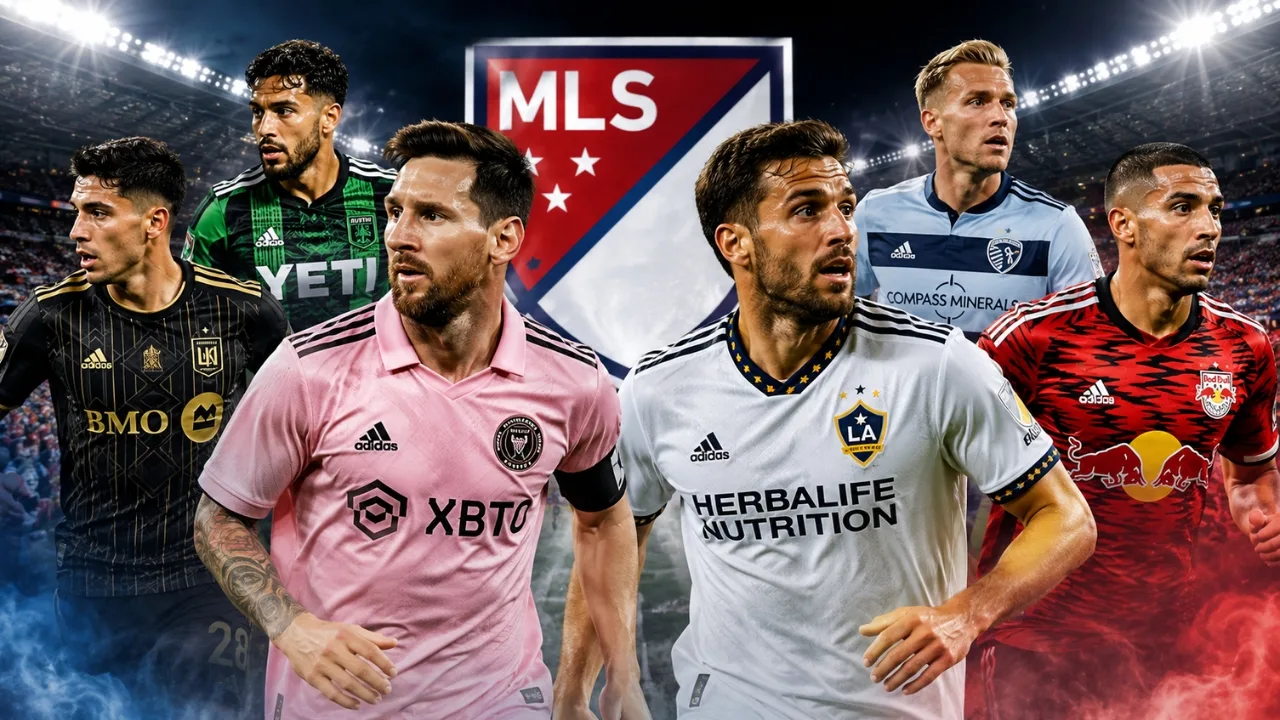
The 2026 MLS season features elite clubs, global stars, and one of the league's most competitive title races.
Major League Soccer continues its 31st season with unprecedented global attention following the 2026 FIFA World Cup hosted across the United States, Canada, and Mexico. With Lionel Messi leading Inter Miami, the arrival of internationally recognized talent, and an increasingly competitive title race, MLS has strengthened its reputation as one of North America’s fastest-growing football competitions. This guide explains the league format, top clubs, standout players, and the biggest storylines shaping the remainder of the 2026 season.
MLS 2026 Season at a Glance
If you’re new to MLS in 2026, here’s what matters most:
| Category | Details |
|---|---|
| League | Major League Soccer (MLS) |
| Season | 31st MLS campaign |
| Clubs | 30 teams |
| Regular Season Matches | 34 per club |
| Conferences | Eastern & Western |
| Defending MLS Cup Champion | Inter Miami CF |
| Biggest Star | Lionel Messi |
| Official Website | MLSsoccer.com |
MLS features 30 clubs split evenly between the Eastern and Western Conferences, with every team playing a 34-match regular season before the Audi MLS Cup Playoffs.
Why MLS Is Growing So Quickly
MLS has experienced steady growth through investment in stadiums, youth academies, player recruitment, and fan engagement. Combined with increased international exposure following the 2026 FIFA World Cup, the league continues to attract a wider global audience while remaining one of the fastest-growing football competitions in North America.
How the MLS 2026 Season Works
Unlike most European leagues, MLS uses a conference-based structure.
Each club plays 17 home matches and 17 away matches during the regular season. Teams primarily face opponents within their own conference while also playing selected interconference fixtures.
At the end of the regular season:
- The highest-ranked teams qualify for the Audi MLS Cup Playoffs.
- The Supporters’ Shield is awarded to the club with the best overall regular-season record.
- MLS Cup determines the league champion.
The league continues to follow IFAB’s Laws of the Game while maintaining several competition-specific roster and scheduling rules.
Eastern Conference Teams
The Eastern Conference combines historic clubs with several emerging contenders.
| Club |
|---|
| Atlanta United |
| Charlotte FC |
| Chicago Fire FC |
| FC Cincinnati |
| Columbus Crew |
| D.C. United |
| Inter Miami CF |
| CF Montréal |
| Nashville SC |
| New England Revolution |
| New York City FC |
| Orlando City SC |
| Philadelphia Union |
| New York Red Bulls |
| Toronto FC |
Western Conference Teams
The Western Conference remains equally competitive.
| Club |
|---|
| Austin FC |
| Colorado Rapids |
| FC Dallas |
| Houston Dynamo |
| LAFC |
| LA Galaxy |
| Minnesota United |
| Portland Timbers |
| Real Salt Lake |
| St. Louis CITY SC |
| San Diego FC |
| San Jose Earthquakes |
| Seattle Sounders |
| Sporting Kansas City |
| Vancouver Whitecaps |
The addition of San Diego FC has further expanded the league’s footprint in North America.
Conference Strength in 2026
Both conferences feature legitimate MLS Cup contenders. The Eastern Conference is led by clubs such as Inter Miami and FC Cincinnati, while the Western Conference includes experienced playoff teams like LAFC, Seattle Sounders, and Vancouver Whitecaps, creating a balanced championship race.
Top MLS Cup Contenders in 2026
Inter Miami CF
Inter Miami remain the league’s headline attraction.
Led by Lionel Messi, the club enters the season after winning the 2025 MLS Cup and continues to feature one of the league’s strongest squads. Messi also became the first player in league history to win consecutive MLS MVP awards.
Why They Matter
- Elite attacking talent
- Proven championship experience
- One of the league’s deepest rosters
LAFC
Los Angeles FC continue to be among MLS’s strongest organizations.
Their consistent recruitment strategy and competitive performances make them genuine title contenders every season. The club also added global star Son Heung-min, further strengthening an already talented squad.
FC Cincinnati
FC Cincinnati have developed into one of the Eastern Conference’s most consistent teams.
Their balanced squad, tactical discipline, and attacking quality have made them a regular contender for silverware in recent seasons.
Seattle Sounders
Seattle remain one of MLS’s benchmark clubs.
Strong academy development, experienced leadership, and a winning culture continue to keep them among the Western Conference favorites.
Vancouver Whitecaps
Vancouver have become one of the fastest-rising clubs in MLS.
Strong performances, smart recruitment, and consistent results have elevated expectations around the Canadian side entering the second half of the campaign.
Top MLS Players to Watch in 2026
Lionel Messi (Inter Miami)
Messi remains the biggest attraction in MLS.
Beyond his individual quality, he has transformed global interest in the league. As play resumed following the FIFA World Cup break, he was once again among the leading scorers in the Golden Boot race.
Son Heung-min (LAFC)
The South Korean captain brings Premier League pedigree, elite finishing, and global star power to Los Angeles.
His arrival represents another major step in MLS’s growing international appeal.
Evander (FC Cincinnati)
One of MLS’s most creative midfielders, Evander continues to dictate matches through vision, passing range, and goal contributions.
Hugo Cuypers (Chicago Fire)
Cuypers entered the post-World Cup portion of the season leading the MLS Golden Boot race with 13 goals, highlighting his importance to Chicago Fire’s attack.
Thomas Müller (Vancouver Whitecaps)
The German World Cup winner has brought leadership, tactical intelligence, and experience to Vancouver, adding another internationally recognized name to the league.
Why MLS Continues to Grow
Major League Soccer has changed dramatically over the past decade. While experienced international stars remain an important part of the league, clubs now invest heavily in youth development, modern training facilities, and player recruitment. MLS has also become an important pathway for emerging talent aiming to move to Europe’s biggest leagues.
The 2026 FIFA World Cup has brought additional attention to football across North America, increasing interest in MLS among domestic and international audiences. Clubs continue to benefit from improved infrastructure, larger fan bases, and growing commercial investment, helping raise the league’s overall profile.
Rising Stars to Watch
While established international names often grab the headlines, MLS remains one of the best leagues for developing young talent.
Diego Luna (Real Salt Lake)
Luna has emerged as one of the brightest American attacking players, combining creativity with confidence in one-on-one situations. His performances have strengthened both his club reputation and his standing within the U.S. national team setup.
Cavan Sullivan (Philadelphia Union)
Widely regarded as one of America’s top teenage prospects, Sullivan continues to attract attention for his technical ability, vision, and maturity. His development is being closely monitored by clubs around the world.
David Martínez (LAFC)
The Venezuelan winger has impressed with his pace, direct running, and ability to create chances in the final third, making him one of the league’s exciting young attacking talents.
What Makes MLS Different from European Leagues?
MLS operates under a different structure than most of Europe’s top competitions.
| MLS | Traditional European Leagues |
|---|---|
| Conference-based format | Single league table |
| Salary budget rules | Open transfer spending |
| MLS Cup Playoffs decide champion | League table decides champion |
| Supporters’ Shield for best regular-season record | League title awarded to first place |
The salary budget system is designed to promote competitive balance across the league, while Designated Player rules allow clubs to sign world-class talent outside standard budget limits.
Common Misconceptions About MLS
“MLS is only for retired stars.”
That perception no longer reflects reality.
Although experienced players remain important, clubs now invest heavily in younger talent from South America, Europe, and domestic academies. Many players use MLS as a stepping stone before moving to Europe’s biggest leagues.
“The quality isn’t improving.”
Recent performances in international competitions and the growing number of players transferring between MLS and Europe’s top divisions suggest the league’s overall standard continues to rise.
“Only Lionel Messi matters.”
Messi undoubtedly attracts global attention, but MLS now features a wide range of recognizable names alongside emerging stars. Clubs such as FC Cincinnati, Columbus Crew, LAFC, Seattle Sounders, and Vancouver Whitecaps continue to succeed because of strong squads rather than relying on a single player.
Biggest Storylines for the Rest of the MLS 2026 Season
Several major narratives will shape the remainder of the campaign.
- Can Inter Miami defend their MLS Cup title?
- Will Lionel Messi add another major trophy to his MLS career?
- Which club will secure the Supporters’ Shield?
- Can expansion side San Diego FC make a deep playoff run?
- Which young player will emerge as the league’s next breakout star?
- How will MLS clubs perform in continental competitions following the World Cup?
Each storyline has the potential to define the second half of the season.
Why the Final Months Matter
The closing months of the regular season will determine playoff qualification, Supporters’ Shield standings, and postseason seeding. Every match carries greater importance as clubs compete for home-field advantage and a place in the Audi MLS Cup Playoffs.
Key Takeaways
- MLS features 30 clubs split between the Eastern and Western Conferences.
- Every club plays 34 regular-season matches before the Audi MLS Cup Playoffs.
- Inter Miami enter the season as defending MLS Cup champions.
- Lionel Messi remains the league’s biggest global attraction.
- LAFC, FC Cincinnati, Seattle Sounders, and Vancouver Whitecaps are among the strongest contenders.
- Young talents continue to emerge through MLS academies and international recruitment.
- The league’s global reputation continues to grow following the 2026 FIFA World Cup.
Final Thoughts
MLS enters the second half of the 2026 season in one of the strongest positions in its history. The combination of established global stars, ambitious clubs, talented young players, and increasing international attention has made the competition more compelling than ever.
Although Lionel Messi remains the league’s biggest global attraction, MLS is now defined by far more than one player. Competitive balance, continued investment, youth development, and growing international recognition have strengthened the competition, making the remainder of the 2026 season one of the most anticipated in league history.
FAQ
How many teams play in MLS in 2026?
MLS features 30 clubs, divided equally between the Eastern and Western Conferences.
How many regular-season matches does each team play?
Each club plays 34 regular-season matches before the MLS Cup Playoffs begin.
Who are the defending MLS Cup champions?
Inter Miami CF entered the 2026 season as the defending MLS Cup champions.
Who is the biggest star in MLS?
Lionel Messi remains the league’s most recognizable player and one of its leading attractions.
Does MLS use promotion and relegation?
No. MLS operates as a closed league and does not use promotion or relegation.
How is the MLS champion decided?
The Supporters’ Shield is awarded to the club with the best regular-season record, while the MLS Cup champion is determined through the postseason playoffs.
Sources Used
- Major League Soccer (MLS) – Official Competition Guidelines
- MLS Communications & Competition Rules
- FIFA
- Reuters
- GOAL
- Sports Illustrated (SI Soccer)
- ESPN FC
About the Author